


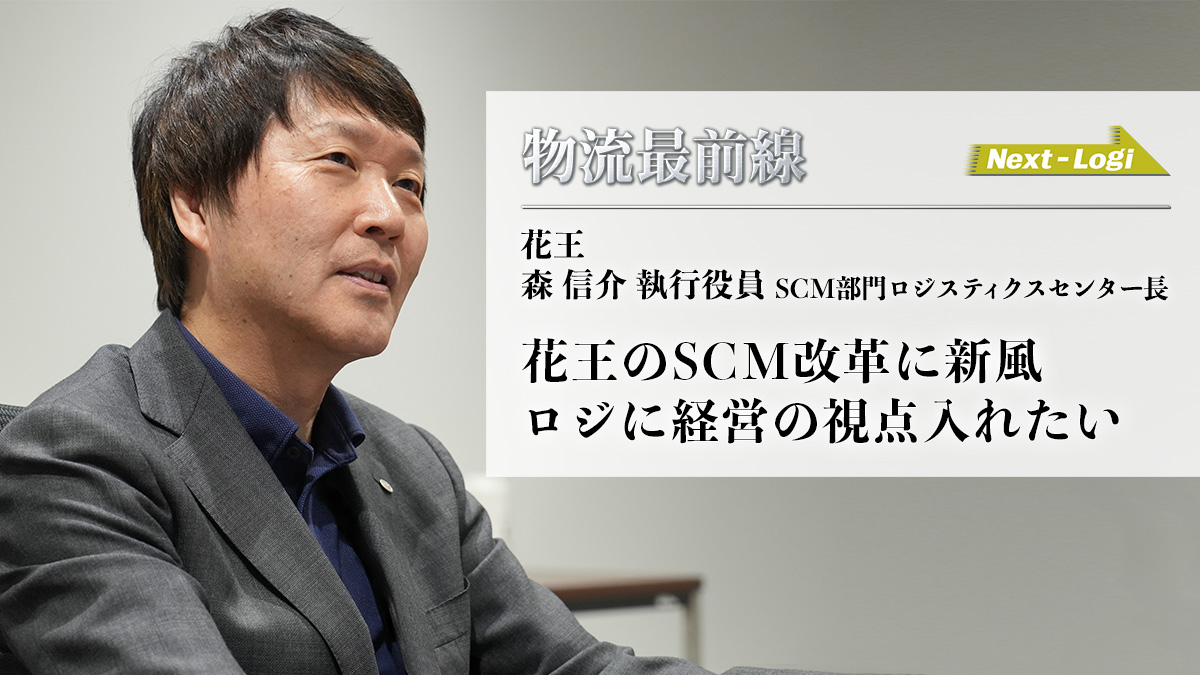
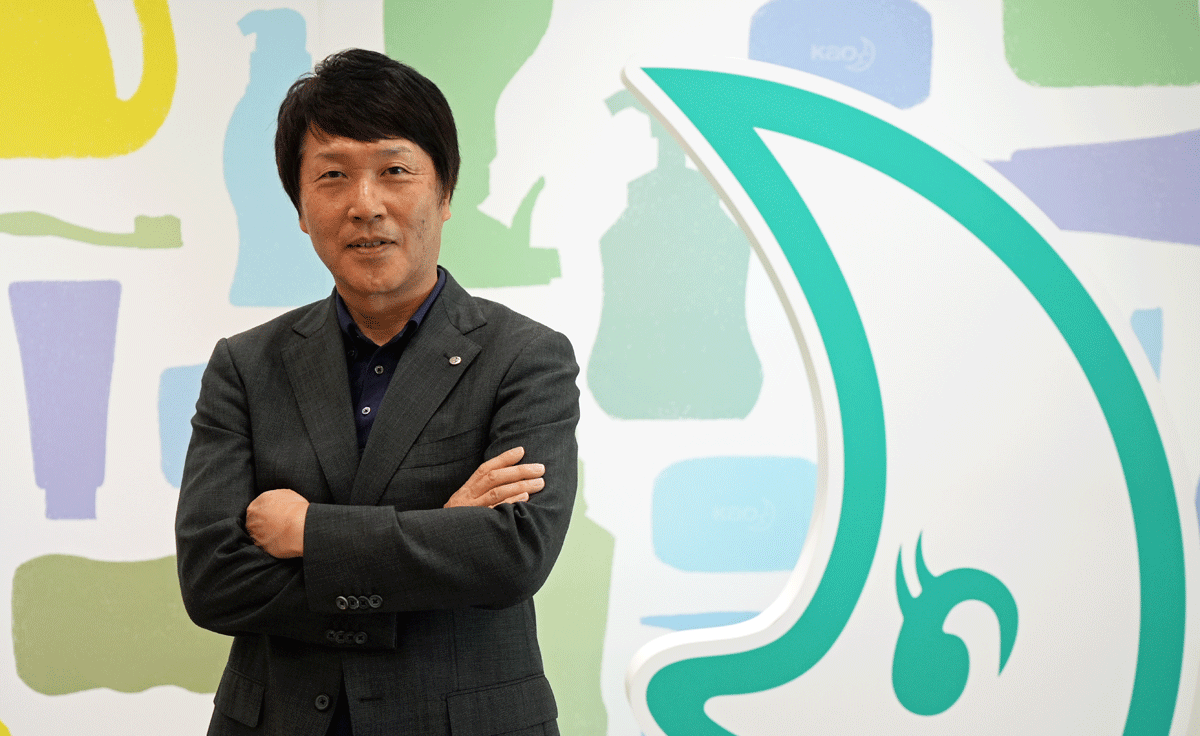
Shinsuke Mori, who joined Kao Corporation in October of last year from the Yamato Group and was appointed Executive Officer and General Manager of the Logistics Center in the SCM Division in January of this year, has a unique career path, having transitioned from the logistics industry to the shipper side. Kao is a leading manufacturer of daily necessities and chemicals. While it has its own wholesale and logistics functions, what is needed is SCM reform from a new perspective. We interviewed Mr. Mori, who is eager to "raise the position of logistics to the next level," about the direction of his efforts and his beliefs. (Interview date: June 17, 2025, at: Kao Sumida Plant)
<Mori, Executive Officer, Head of Logistics Center, SCM Division>
Promote automation and base policies
Update your mindset and organization
-- First, could you tell us about Kao's business structure?
Mori Kao operates in four business areas: daily necessities, which we call consumer products; the "Hygiene Living Care Business," which includes fabrics and dish soaps; the "Health Beauty Care Business," which includes facial cleansers, shampoos, and toothpastes; the "Cosmetics Business"; the "Business Connected Business"; and the "Chemicals Business." Consumer products account for approximately 80% of sales, while chemicals account for approximately 20%.
<Kao's Business Structure (as of December 2024)>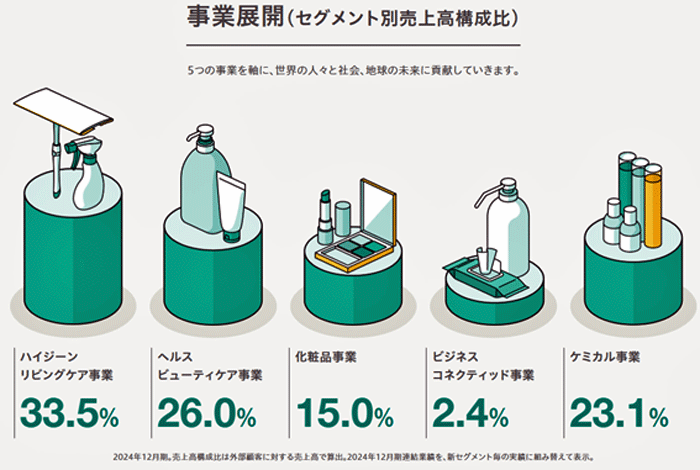
-- What is the annual volume of cargo you handle?
In Morioka , we handle approximately 1.7 million tons of daily necessities annually. Yamato Transport's parcel delivery service handles about 19 billion packages per year, and Kao operates on roughly the same scale in-house. We have many SKUs, but each individual item is small, and the cases vary. We continue to discuss packaging and wrapping sizes to match the size of our products.
— Do you have enough workers and drivers to transport this much cargo?
Mori Kao has 31 logistics centers nationwide, employing approximately 4000 people, including part-time workers. However, there are actually some areas where recruitment is difficult, so we are working on "automation and efficiency" to improve the efficiency of warehouse operations.
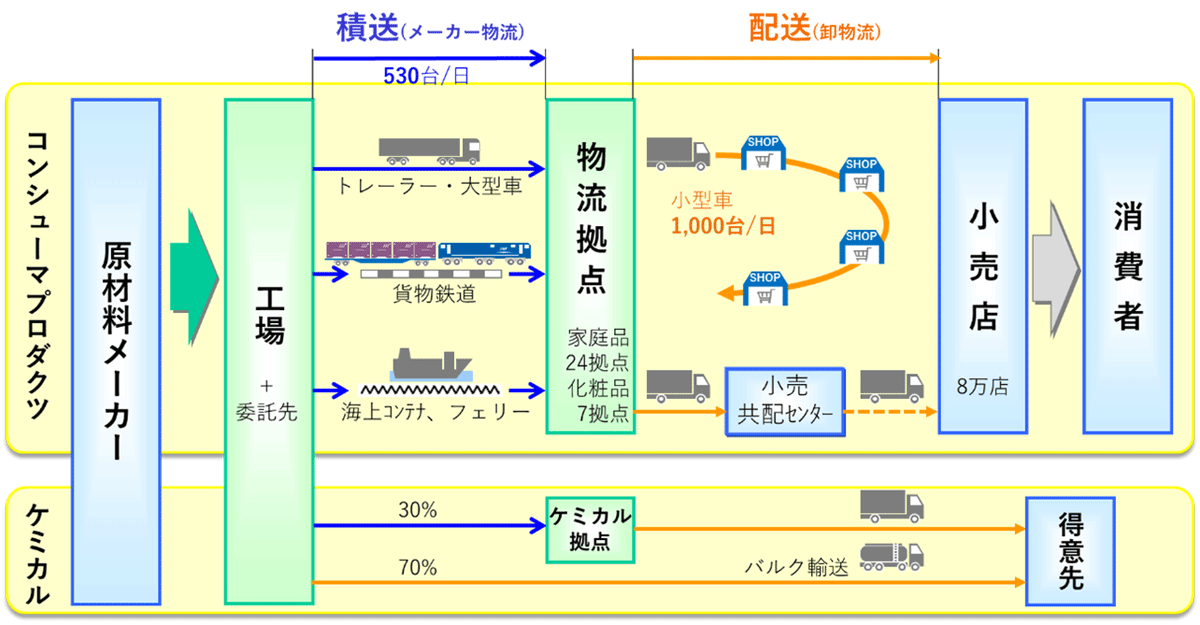
In terms of transportation and delivery, we have established our own logistics system connecting 10 factories nationwide with approximately 8 retail stores. Of this, loading (from factories to Kao logistics centers) is almost 100% outsourced to partners and collaborating companies, while deliveries from logistics centers to retail distribution centers and stores (customers) are made using a combination of our own vehicles and those of our collaborating companies.
<Kao's Logistics Flow>
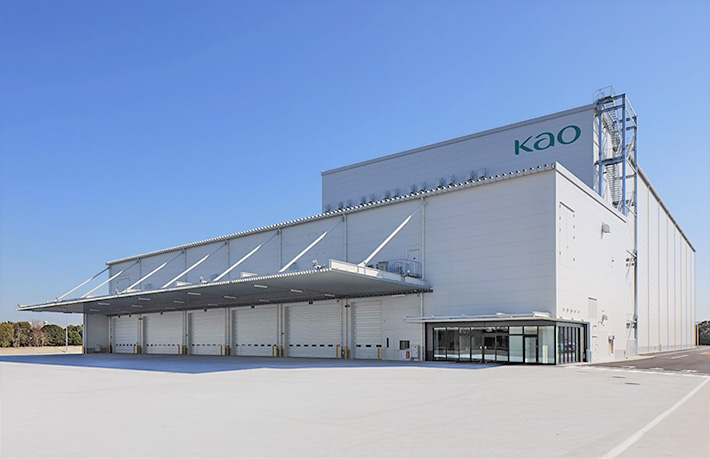
-- Speaking of automation, I hear that the next-generation warehouse in Toyohashi City, which was completed in March 2023, is aiming for unmanned operation. What is the current situation?
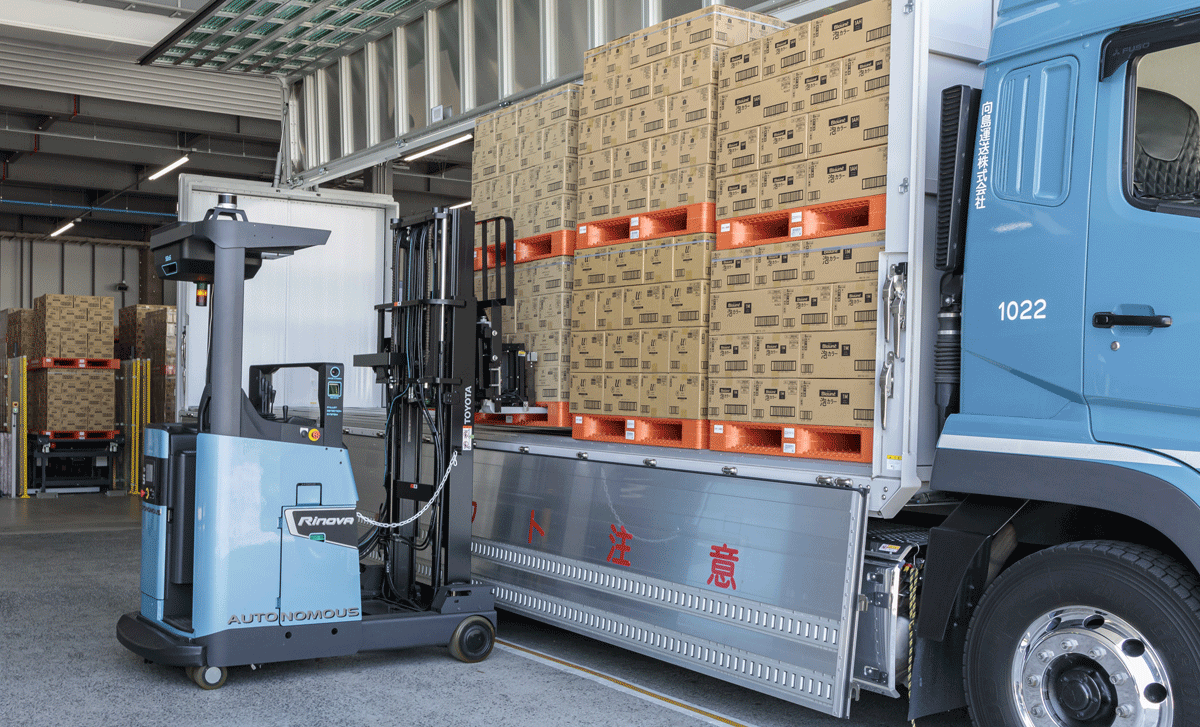
At Mori Toyohashi, we made a bold investment and successfully implemented the final, previously challenging step of loading the goods onto large trucks using AGF (Automated Forklifts) last year, thus achieving automation throughout the entire process.
<Next-generation logistics facility in Toyohashi City>
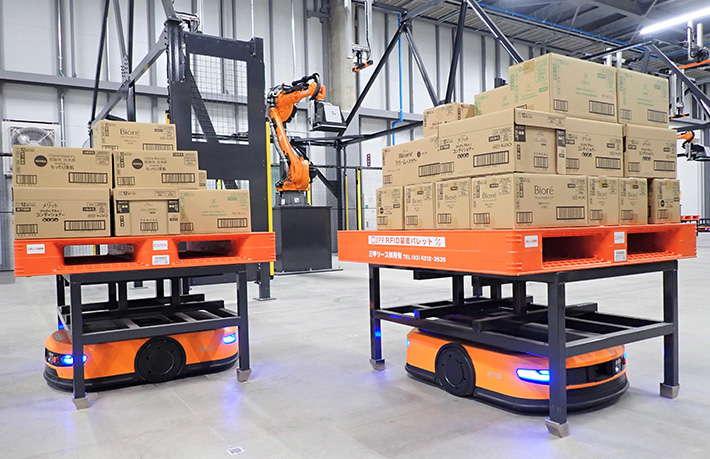
<Scenes from the autonomous forklift demonstration>
— Will you promote automation at other Kao logistics centers as well?
Mori: Our main logistics bases consist of 24 locations for daily necessities and 7 locations for cosmetics, and most of them were built about 30 to 40 years ago with state-of-the-art automated warehouses at the time. The number of SKUs has also increased since then, but the people on the ground have made incredible efforts to improve and make improvements, which is truly admirable, and have kept them going for so long.
However, it's not the case that we'll be able to create more bases like Toyohashi one after another; there are still areas where human power and quick response are necessary. In those bases, the idea is not to automate everything, but rather to introduce robots into processes that are currently done manually, such as picking and handling. We plan to invest in these areas, mainly in the Tokyo metropolitan area, and promote automation and efficiency.
On the other hand, in order to raise the investment mindset of management, it is also necessary to consider the idea of generating the capital ourselves. Most of our current bases are owned by the company, but some are aging, and some bases in rural areas are not expected to see much growth in terms of volume in the future. In the future, we would like to incorporate a management perspective into Kao's base policy, focusing on how to invest capital costs and improve the capital turnover rate of the bases themselves.
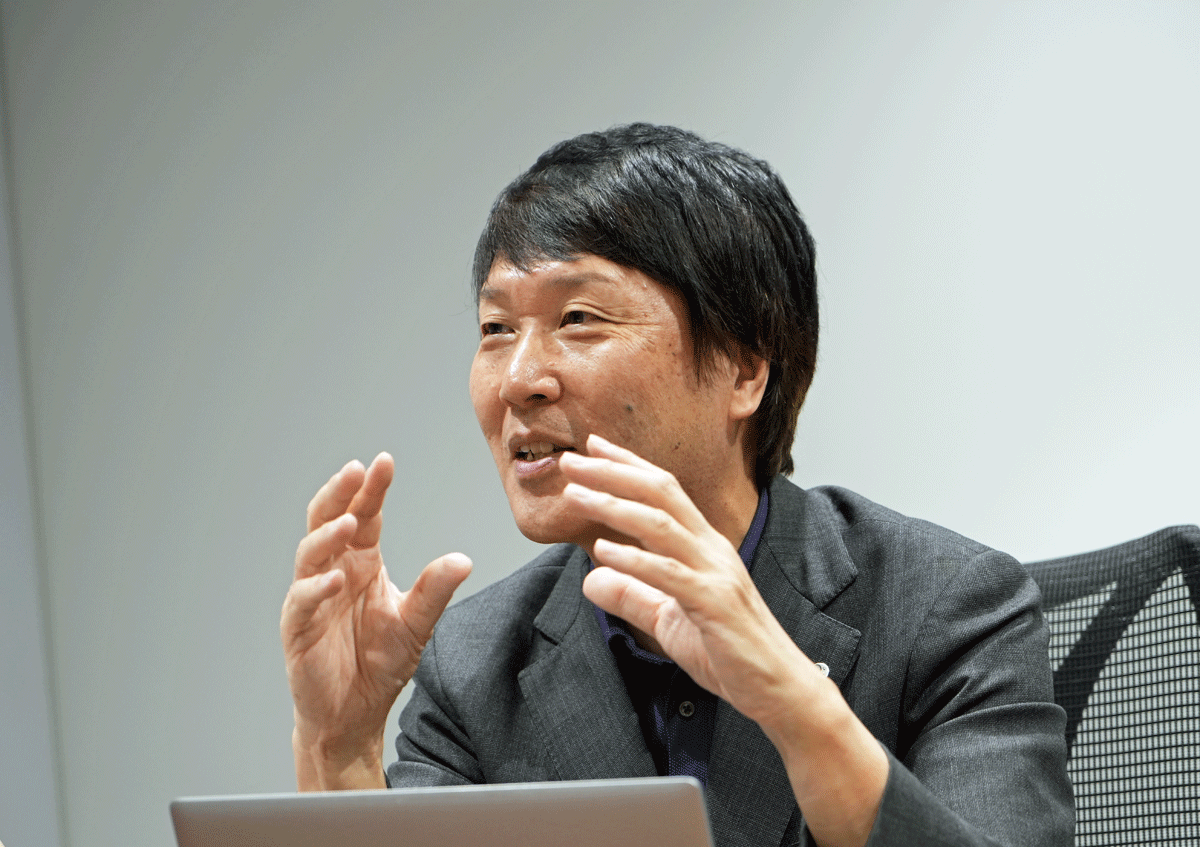
<"Bring a management perspective to logistics," says Executive Officer Mori>
--By the way, Mr. Mori, during your time at Yamato Transport, you were involved in the launch of large logistics terminals in the Tokyo-Nagoya-Osaka area, including "Haneda Chronogate." Now you've taken on the role of logistics manager on the manufacturer's (shipper's) side, so your position has changed. It's been six months since you took up the position; have you noticed any changes in your feelings or anything like that?
Mori: I don't feel any discomfort. At Kao, I sometimes feel that logistics is positioned as a cost center within the manufacturer, but I was in charge of logistics for two years at Yamato, so I was able to easily adapt to the situation on the ground, and the members at Kao are quick to teach me anything I don't understand. I'm really grateful for that.
—This is a promotion from a different industry for Kao. I imagine there are high expectations.
Mori : That's right. Kao's performance made a V-shaped recovery in its consolidated financial results for fiscal year 2024, but I've heard that the three years prior to that were a difficult period for management due to the impact of the COVID-3 pandemic. Kao has its own logistics system, and I think that the management team became aware of logistics issues that they hadn't noticed when things were running smoothly, as they proceeded with structural reforms. I myself would like to take on that challenge.
— What kind of challenge will you take on first?
When I first joined the company , I noticed that in the SCM department at headquarters, there is one executive officer on the production technology side and myself on the logistics side, but I felt that logistics was a little too heavily skewed towards production. Also, at Kao, the sales department is a separate organization called KCMK (Kao Customer Marketing), so sales and logistics felt distant from each other. I believe that production, logistics, and sales should be on equal footing, with logistics acting as a mediator between production and sales.
For example, when a new product is developed, the business and sales teams decide how much to produce and sell. Based on that, the production team makes the product, and logistics manages its movement. The starting point is still the business and sales teams, but logistics acts as a link between them.
The introduction of new products increases the number of SKUs, which can lead to increased workload and higher costs in logistics. On the other hand, leveraging our logistics expertise, we can propose improvements such as changing packaging sizes to enhance logistics efficiency. That's why we want to elevate the role of logistics to the next level.
In order to have more influence over production, sales, and ultimately the business itself, our logistics team must ensure a stable supply on a daily basis. That's what we intend to focus on first.
With digital transformation, logistics becomes a "strategy."
Our strength lies in our in-house logistics system, which includes wholesale capabilities.
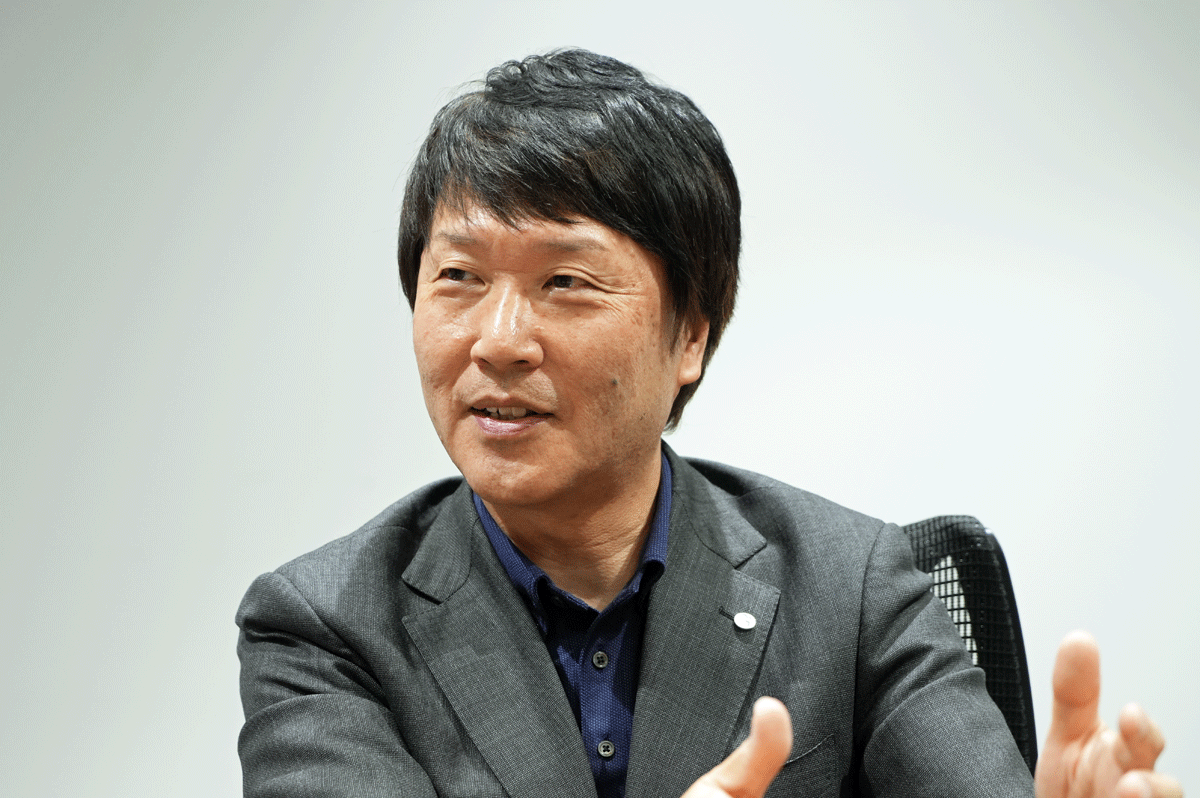
<Mori, Executive Officer>
— Has Kao been affected by the "2024 problem"?
It's become difficult to secure vehicles for long-distance transport in Mori . While it's fine for places we use regularly, it's hard to find them for spot jobs or when the volume of goods suddenly increases. There are also issues with freight rates. Of course, we consider and respond to requests for price increases, but is the portion of the freight rate increase that Kao accepts actually being paid to our partner companies and then to the drivers? As a leader in the industry, I think it's important for Kao to recognize these challenges.
— You were on the receiving end of the negotiating regarding fares.
I don't really feel like my perspective would change if I were in a different position. After all, Yamato itself is a business that cannot function without partners. Although I myself was not on the front lines of intense freight rate negotiations for very long, business only works with the cooperation of partners. That has been consistent since my time at Yamato, and I want to convey that same feeling of valuing partners to the members at Kao.
— Are there any similarities between Yamato and Kao?
Mori : I think our company culture leans towards a "self-reliance" approach. Kao's members like to think up various logistics systems themselves, collect data, and improve them. However, this is time-consuming, so in order to keep up with the fast-paced times, it's also necessary to boldly outsource certain aspects. In the future, I think it would be good if Kao could increase its experience in gaining expertise from external people.
-- In recent years, the purchasing power of inbound tourists has also been growing. Planned logistics, including demand forecasting, are required, but how will you address this?
The Mori drugstore market is worth over 10 trillion yen, and retailers' buying power is growing stronger. As a result, requests from retailers such as "Please deliver it today" and "Please deliver it individually (piece by piece)" are increasing, putting a burden on logistics operations. Therefore, we would like to use data from retailers to forecast demand and work towards rounding up order units and extending delivery lead times.
-- So, it's about efficiency improvements through digitalization.
Mori: That's right. It's pointless if stores that are selling well don't stock Kao products. Conversely, the fact that products are readily available on the shelves means that logistics are functioning properly.
Generally, as sales increase, the volume of goods also increases. Logistics costs will continue to rise if nothing is done, and labor costs will also increase. One of the important roles of Kao's logistics is to control logistics costs while taking all of these factors into account. To that end, we are working with drug chains and others to optimize the number of deliveries based on demand forecasts and extend lead times. I believe that all of these efforts are connected to a larger management perspective.
—So it's not simply about lowering "logistics costs"?
Mori: That's right. We're designing our logistics as a strategy. To that end, we want to change the way we deliver and transport our products. While negotiating with retailers, we're trying various things to achieve sustainable logistics, such as changing from delivering individual items to delivering in case units whenever possible, increasing the proportion of direct delivery from the factory to retailers instead of going through Kao's logistics centers, and working to extend lead times based on demand forecasts. Kao has its own logistics and wholesale functions, which I think is truly rare in the daily necessities industry.
—So, by improving the accuracy of demand forecasts, you can meet both logistics efficiency and market needs, right?
Mori: That's right. While other companies in the same industry leave logistics almost entirely to wholesalers, Kao has its own know-how. As times change, I'm sure there are people who say, "Isn't it about time Kao outsourced its logistics?"
But is it really okay to completely outsource this to another company? The daily necessities industry has its own unique business practices. Retailers make various logistics requests in order to improve the efficiency of store operations. Kao can sort products ourselves, and to put it simply, we know all the costs per unit, so we want to propose the introduction of new service standards to address these business practices. That's why I think there's meaning in doing it ourselves.
Within that context, and considering the balance when looking at the entire country, we are considering outsourcing some regional bases where the volume of goods is decreasing in the future. However, we have no intention of abandoning the core aspects, the foundation we have built up so far, as these are important. I believe that this is where Kao's strength lies.
"Once-in-a-lifetime encounter" - cherishing connections.
New joint transportation and delivery services have also started.
<Diagram of the inter-station transportation scheme between Kao and Kirin Beverage>
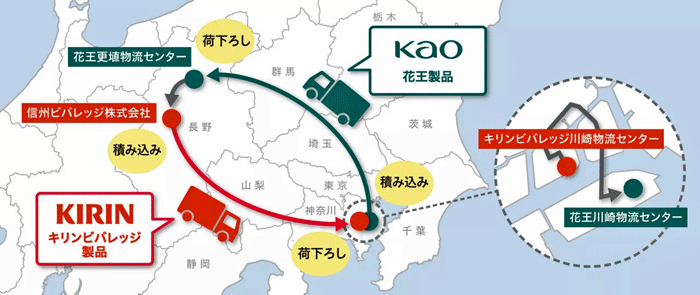
-- Kao has also been working with Kirin Beverage on round-trip transportation between their facilities since February 2025. Will you continue to pursue these kinds of initiatives in the future?
Mori: That's right. We would like to continue exploring joint transportation and delivery with companies in the same and different industries. It will probably start small, but if both parties agree that it is viable, we will expand to different regions and areas. If the movement to use one truck rather than two trucks spreads throughout the industry, given the current situation where trucks cannot be secured, it will be a good thing for the logistics industry as a whole.
-- Loading efficiency, especially the issue of return loads, is a challenge, but it would be great if we could find a way to match these issues effectively.
In the case of Mori Kao, loading from the factory to the distribution center is almost 100%, but by collaborating with Kirin, they were able to utilize empty return trucks to enable round-trip transportation. By transporting goods to their respective logistics centers in Kanagawa and Nagano prefectures, they have achieved high loading rates on both the outbound and return journeys.
For deliveries from logistics centers, the trucks are initially loaded with goods, but they are almost empty when they return. However, they don't start at 100% capacity even when departing, so I think the practice of loading other companies' goods together and unloading them together if they are going to the same destination will become more widespread.
—So, logistics hubs will also take on a profit center role, right?
While there's the idea of generating income through Mori Joint Logistics, the reality is that it won't happen overnight. First, we want to work on joint delivery with companies in the same industry and different industries. And in the future, we hope to develop joint logistics together with wholesalers as well.
— Going forward, certain shippers will be required to establish a CLO (College Licensing Office) and submit medium- to long-term plans. What is Kao's response to this?
I believe we will proceed according to Mori's schedule, but naturally, we need to incorporate a management perspective into Kao's logistics. Rather than just seeking efficiency improvements and cost reductions in the logistics domain, we need to take a broader view and examine Kao's logistics from a management perspective, considering how to effectively utilize assets and how to think about invested capital. We need to be able to offer opinions on production, business, and sales, and communicate with management on the same level. That is what I believe a CLO should be.
-- Could you tell us about a word or motto that you cherish, Mr. Mori?
Mori : "Ichigo Ichie" (a once-in-a-lifetime encounter). It relates to cherishing my partners, but it's also about cherishing the people I've become involved with, and not neglecting connections with people both inside and outside the company. I've grown up learning so much from people, and I wouldn't be where I am today without the advice of the people I've met. That's why I truly believe in cherishing every encounter.
-- Finally, do you have a message for LNEWS readers?
Mori Kao is a shipper, and I am also involved in logistics, so I am involved in both. Because of this background, I have the mindset to do things that have been difficult to achieve in the past, even though people have been saying "we want to work together" with the logistics industry, manufacturers, and wholesalers. I am currently a member of the committee to consider the comprehensive logistics policy outline for fiscal year 2030, which is being advanced by the Ministry of Land, Infrastructure, Transport and Tourism, the Ministry of Economy, Trade and Industry, and the Ministry of Agriculture, Forestry and Fisheries, and I believe it is important to exchange opinions with people from various industries and truly connect with them. If there is anyone who would like to work together on something, please feel free to contact me.
Interview and writing by Terumi Yoshisaka and Kimio Yamauchi
■ Profile
Shinsuke Mori
He worked for Yamato Transport/Yamato Holdings from October 1997 to September 2024. From November 2008 to March 2018, he established four large-scale logistics terminals in the Tokyo, Nagoya, and Osaka areas, including the "Haneda Chronogate," the largest of its kind in Japan. In April 2018, he was appointed Managing Director and Executive Officer of Yamato Logistics, and in April 2021, he became Executive Officer and General Manager of Asset Management at Yamato Transport. In October 2024, he assumed the position of Executive Officer (in charge of logistics reform) at Kao Corporation. From January 2025, he will serve as Executive Officer and General Manager of the Logistics Center in the SCM (Supply Chain Management) Division.


