


Yamato Transport and WATT, a South Korean robotics development company, began a pilot project on August 22nd using automated delivery robots for large apartment complexes.
<Automated delivery robot for face-to-face delivery (left) and automated delivery robot for contactless delivery (right)>
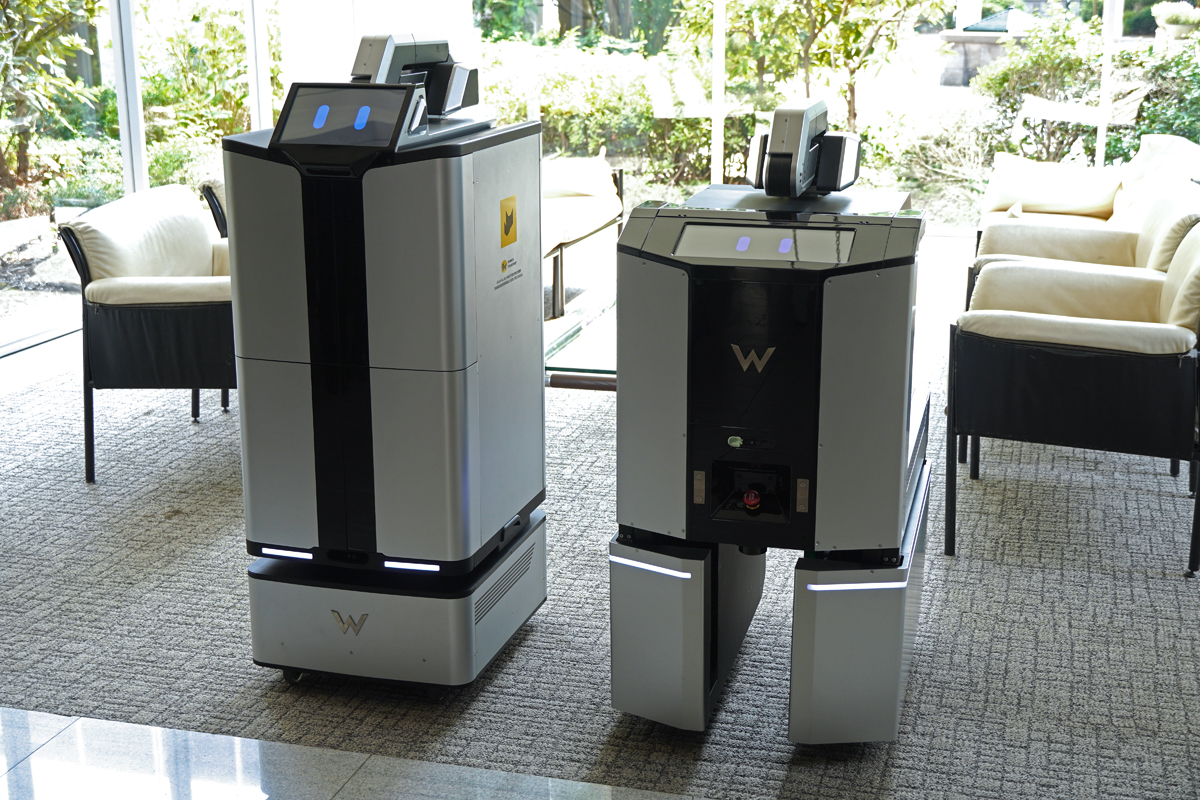
In this demonstration experiment, WATT will use its autonomous inter-floor mobile robots to transport goods within a large-scale apartment complex, aiming to build a new last-mile delivery model for apartment buildings.
In recent years, with the increasing number of large-scale apartment buildings exceeding 1000 units in urban areas and redevelopment zones, this pilot project was initiated to address issues such as a shortage of delivery personnel and to meet customer demands for specific delivery times.
The experiment will be conducted for about a month at Proud Shin-Urayasu Palm Court in Urayasu City, Chiba Prefecture. In October, a similar experiment is planned to be conducted for about two months at Proud Tower Meguro MARC in Shinagawa Ward, Tokyo.
<Placing a package into a smart delivery box>
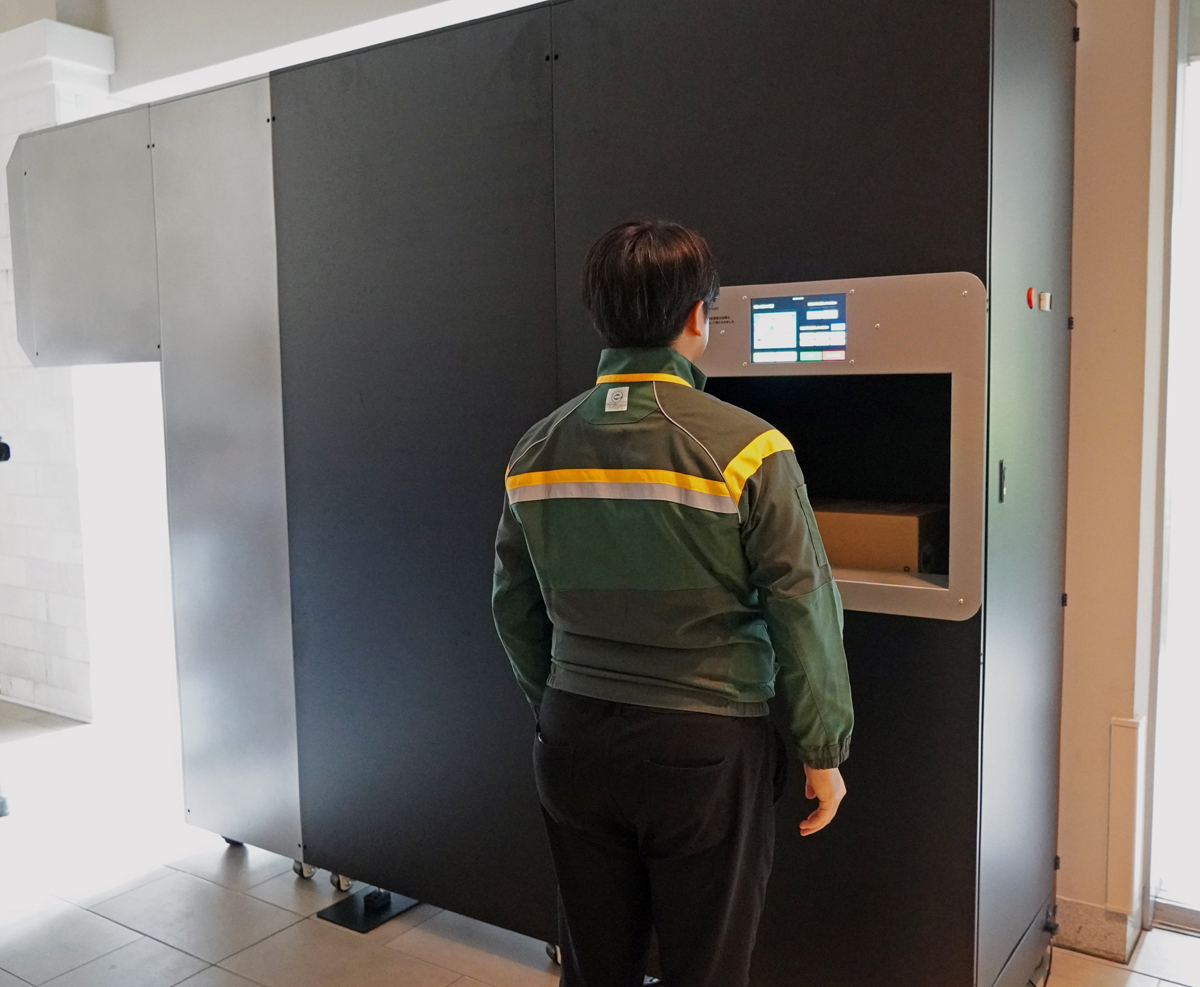
The automated delivery process works as follows: when a staff member places a package in a smart delivery box, an email is sent to the resident. Once the resident specifies their preferred delivery method (in-person or contactless delivery) and time, a delivery robot retrieves the package from the smart delivery box and begins delivery.
<A simulation showing a package being received by an automated delivery robot>
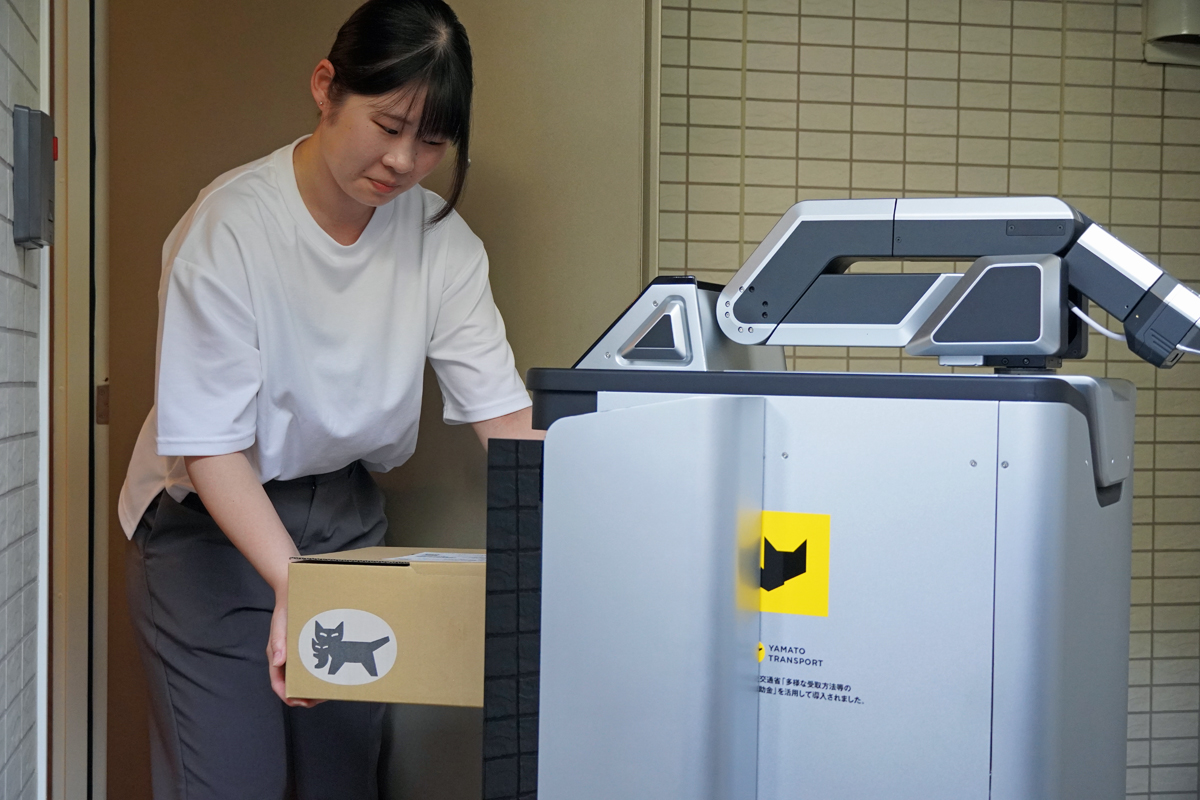
The robot can use its arm to ring the doorbell, and the resident who answers the door can unlock the robot with a password received via email and receive their package. In the case of contactless delivery, the robot places the package in front of the door, completing the delivery.
<An automated delivery robot boarding an elevator on its own>
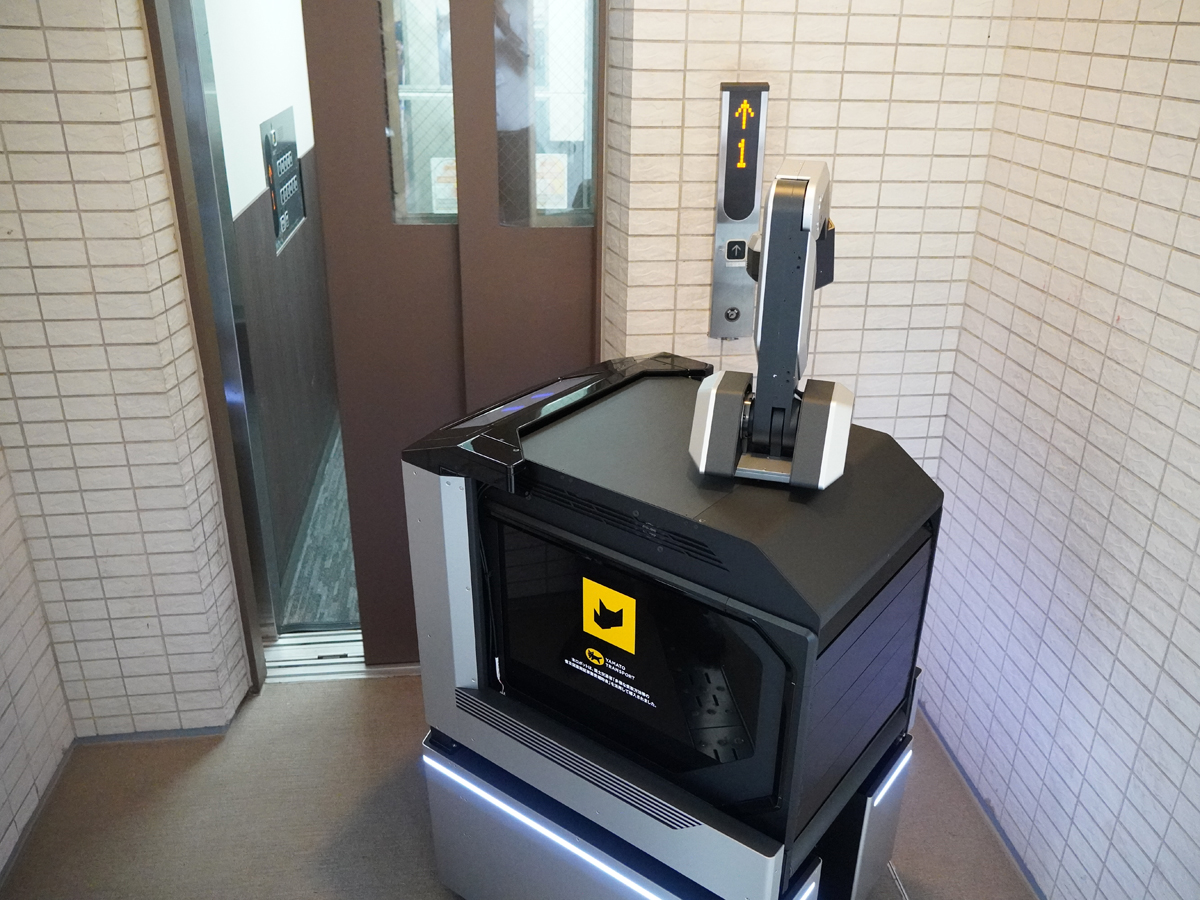
By using the arm, it's possible to bypass the apartment building's security system and even press the elevator button to board, allowing deliveries to residents on higher floors without any problems.
This experiment will verify how efficiently delivery robots can operate within an apartment building environment, and whether they can avoid obstacles. It will also examine social aspects, such as whether residents will accept the operation of automated delivery robots.
<Ryo Kubota, General Manager of the Home Delivery Service Department, Yamato Transport (left), and Yohei Miyahara, Section Chief of the Area Management Promotion Division (right)>
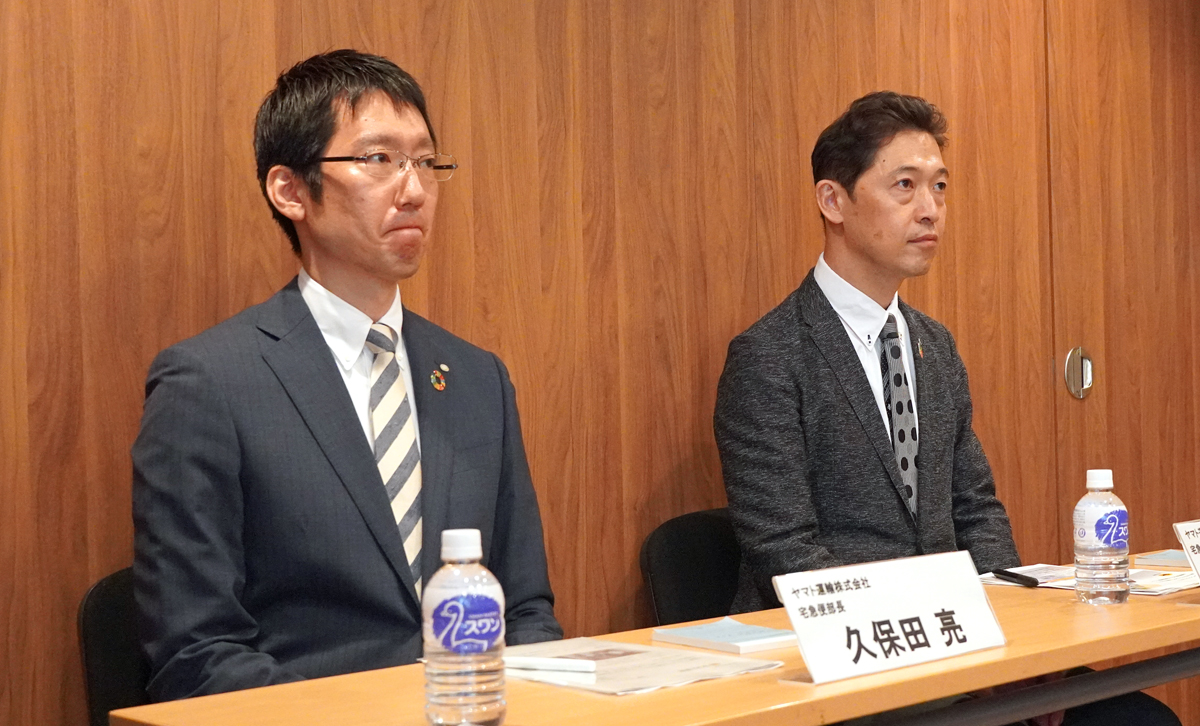
At a press briefing held on the same day, in addition to a robot demonstration, Ryo Kubota, General Manager of the Home Delivery Service Department at Yamato Transport, and Yohei Miyahara, Section Chief of the Area Management Promotion Division, took the stage.
Regarding the demonstration experiment and the future development of automated delivery robots, Ryo Kubota, head of the delivery service department, said, "The best service is when customers can receive their packages at the time they want to receive them. I don't think there has ever been a way to meet this need with a highly versatile robot. Customers should find it convenient, so we want to move forward with demonstration and practical application. If we can address industry-wide challenges with this kind of technology, it will also lead to a reduction in redeliveries."
Regarding future challenges, he said, "We want to thoroughly investigate what is important to the customer and, conversely, what are the problems. There were a few instances in the demonstration earlier where the residents were being considerate." However, when asked about his enthusiasm, he replied, "I am excited. I see potential in using robots to determine whether a customer is there at a given time and to deliver the product at that time."
Going forward, the company plans to expand the demonstration area to include the Tokyo metropolitan area and the Kansai region, aiming for practical application by 2026, and will continue to verify aspects including safety. They also stated that they are considering incorporating cargo from other companies in future demonstrations.
■Experiment Overview
Location: Proud Shin-Urayasu Palm Court
Address: 8-1 Takasu, Urayasu City, Chiba Prefecture
Period: January 2025th to January 8rd, 22
Total number of units: 550 units (condominium type)
Scale: 14 stories above ground
Location: Proud Tower Meguro MARC
Address: 3-3-2 Nishigotanda, Shinagawa-ku, Tokyo
Period: January 2025th to January 10rd, 23
Total number of units: 301 units (condominium type)
Scale: 32 floors above ground / 1 floor below ground


