


On August 27, SBS Toshiba Logistics won two awards at the "2025 Japan Packaging Contest" hosted by the Japan Packaging Technology Association: the "Logistics Award" for packaging technology and the "Industrial Packaging Award" for packaging.
This award recognizes the company's achievement of a total logistics design that includes improved work efficiency, reduced environmental impact, and cost reduction, marking its 23rd consecutive year of receiving this award.
<An environmentally friendly box that allows you to easily retrieve parts without having to search for them>
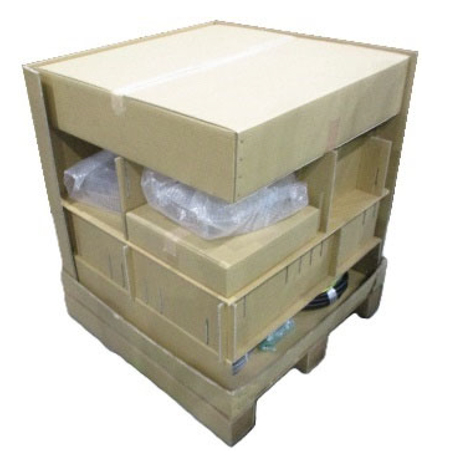
The Logistics Award went to "An environmentally friendly box that lets you retrieve parts without searching for them!" The box's interior is constructed with a four-layer structure using cardboard dividers and holders to secure each stored part, eliminating the need for individual cushioning bags.
Previously, dozens of parts were buried inside small, cushioned bags, making them difficult to retrieve, and multiple people had to check to ensure no parts had been left behind.
This allows you to see the contents of the box at a glance when unpacking, resulting in zero time spent searching for parts, a 60% reduction in unpacking time, and a 75% reduction in waste disposal time.
The compact design of the box reduces packaging volume by 23%, and it can also be folded down to a smaller size after unpacking.
<All-corrugated cardboard for secure fastening of thin circuit boards>
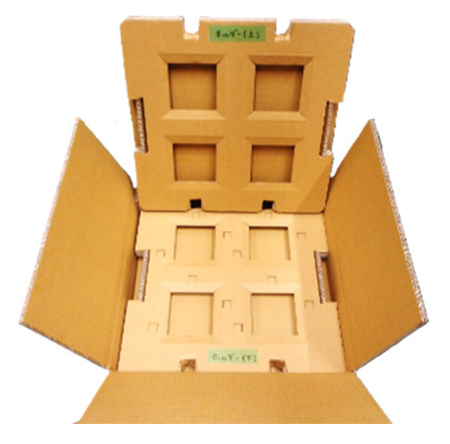
The winner of the Industrial Packaging Award was "All-Cardboard Secure Fixing for Thin Circuit Boards." By devising the shape of the cardboard holder, the product is securely fixed and shock-absorbing, and the packaging size is compact without the use of plastic cushioning material.
Thin circuit boards are prone to cracking and chipping during transportation. Traditionally, plastic cushioning materials were used to secure the products and reduce rattling, thereby mitigating vibration and shock. However, in an effort to eliminate plastic, we have developed a method to ensure quality even without plastic cushioning materials.
Compared to conventional methods, packaging volume has been reduced by 6%, and packaging and transportation costs have also decreased. From an environmental perspective, it has led to a 100% reduction in the amount of plastic used for packaging and a reduction of approximately 13% in CO2 emissions.


