


Kuribayashi Steamship Co., Ltd. announced on September 4th that it will increase its fleet of domestic regular shipping vessels from the current five to six. The increase in the number of services will be achieved by switching one vessel, which was previously chartered by another company, to its own operation from mid-October. The specific operating schedule will be announced in the October shipping schedule.
<Kuribayashi Steamship's domestic regular service vessel "Shinju Maru">
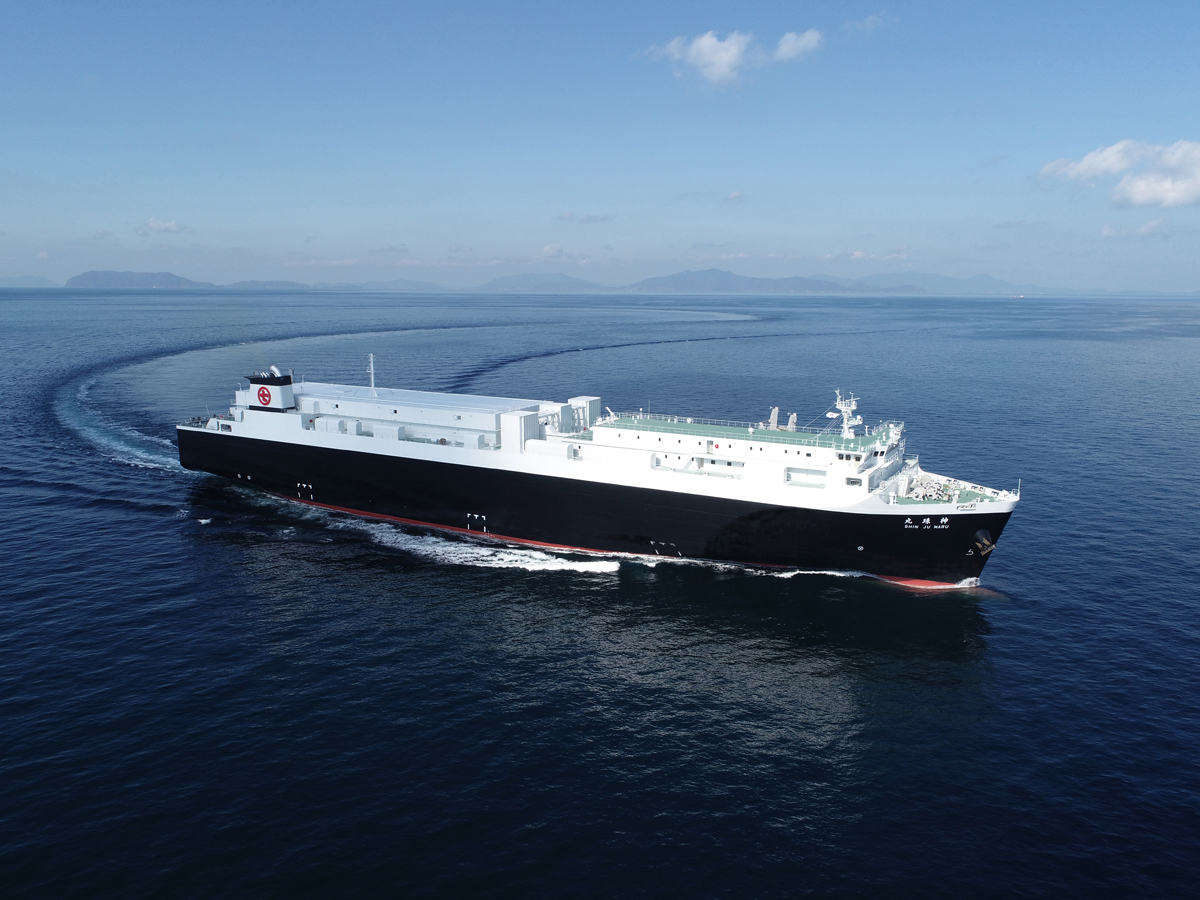
The expansion will meet the needs of truck operators and others who have previously relied on land transport for maritime modal shift, particularly on major trunk lines of Japan's logistics network, such as the Tokyo-Osaka route and the Sendai-Osaka route operated by the company's own RORO ship service.
<Increased service on routes such as Osaka to Tokyo, Sendai, and Tomakomai>
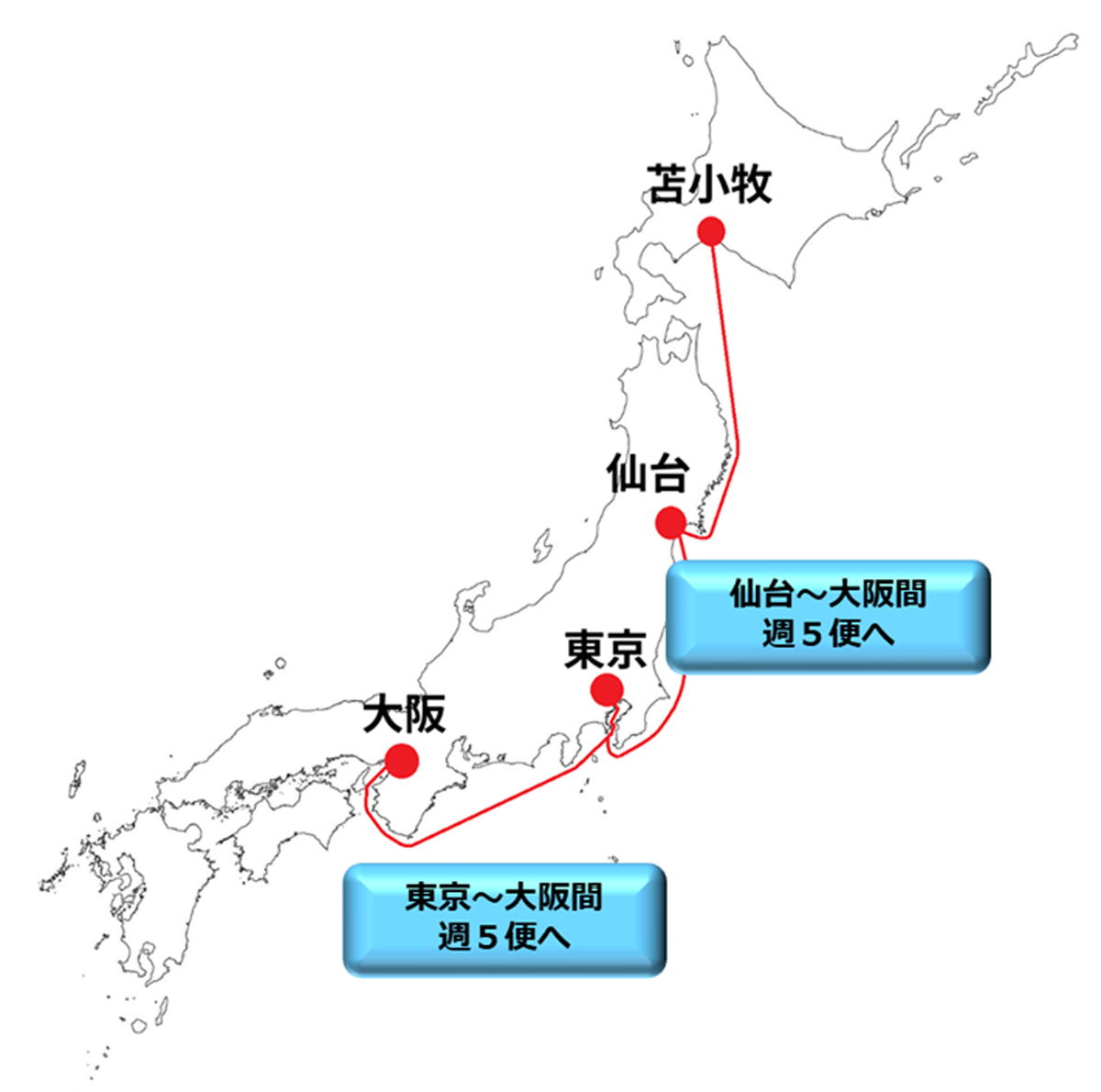
The company boasts a 98.78% on-time operation rate (FY2024 results), and its services contribute to strengthening BCP (Business Continuity Plan) measures in the event of land or rail disruptions due to bad weather or disasters. As a result, expectations are high for maritime transport on major trunk lines, including the Sendai-Osaka route and the Tokyo-Osaka route, where it is the only RORO ship operator.
Furthermore, by switching from land transport between Tokyo and Osaka, which previously took 10 to 12 hours, to integrated sea and land transport using RORO ships, the driving time can be reduced to approximately 3 hours, thus helping to curb long working hours for truck drivers and address the driver shortage.
<Image of transportation using a RORO ship>
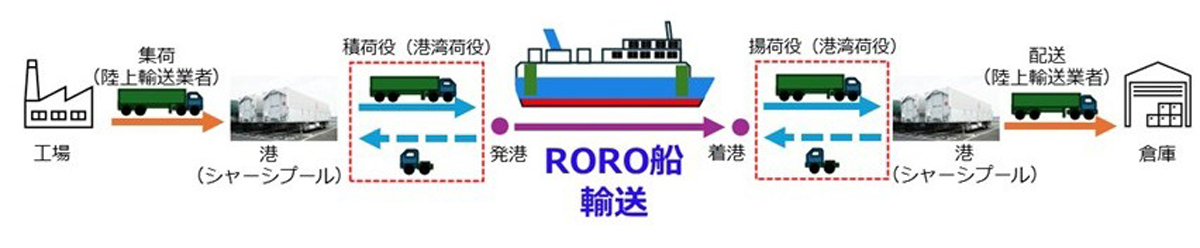
By utilizing maritime modal shift, CO2 emissions per vehicle (for a 20-ton cargo weight) can be significantly reduced compared to truck transport between Tokyo and Osaka by 72%, and between Sendai and Osaka by 74%.
■ Routes to be expanded (number of port calls per week for all routes)
Departing from Tokyo Port: Arriving at Osaka Port (4th → 5th), arriving at Sendai Port (5th → 6th), arriving at Tomakomai Port (5th → 6th)
Departing from Osaka Port: Arriving at Tokyo Port (4th → 5th flight), Arriving at Sendai Port (4th → 5th flight), Arriving at Tomakomai Port (4th → 5th flight)
Departing from Sendai Port: Arriving at Osaka Port (4th → 5th flight), arriving at Tomakomai Port (5th → 6th flight), arriving at Tokyo Port (5th → 6th flight)
Departing from Tomakomai Port: Arriving at Osaka Port (4th → 5th flight), arriving at Sendai Port (5th → 6th flight), arriving at Tokyo Port (5th → 6th flight)


