


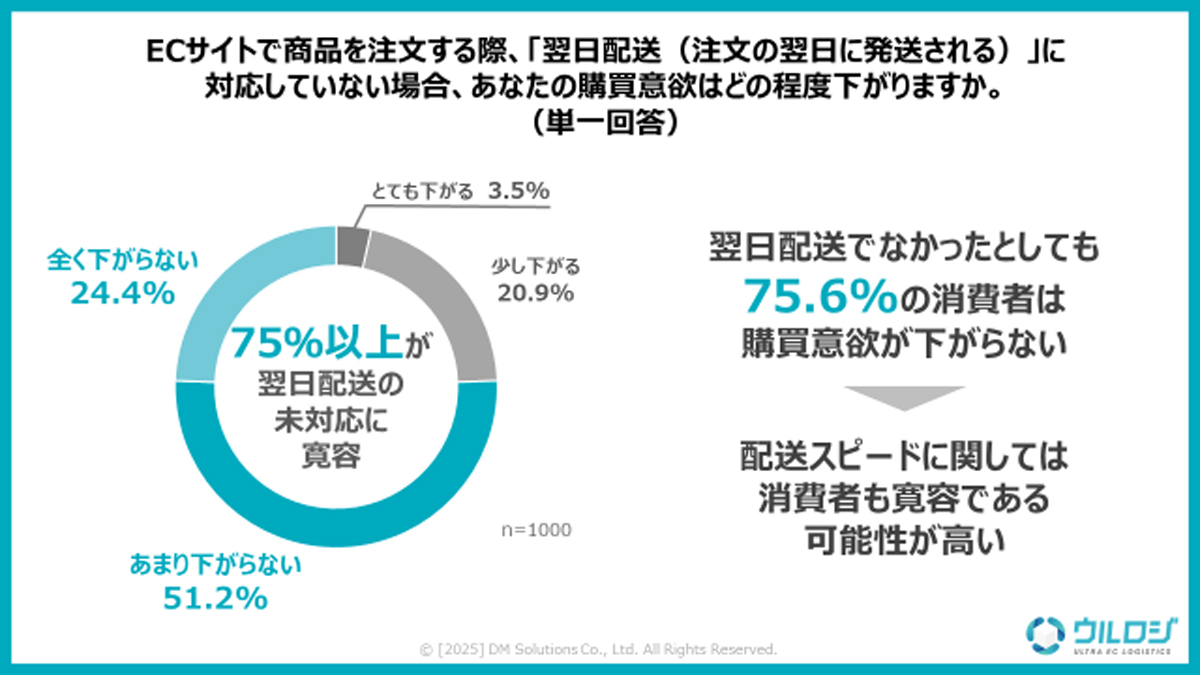
DM Solutions, which operates the e-commerce logistics outsourcing service "UruLogi," announced on September 17th the results of a "Consumer Awareness Survey Regarding Shipping for E-commerce and Mail Order" conducted among 1000 men and women aged 20 to 70 across Japan who regularly use e-commerce. In response to the question, "To what extent would your willingness to purchase decrease if next-day delivery is not available?", 75.6% answered that "it would not decrease."
When asked "How much does your willingness to purchase a product decrease if it is not delivered the next day when ordering from an e-commerce site?", the most common answer was "Doesn't decrease much" (51.2%), followed by "Doesn't decrease at all" (24.4%), then "Decreases slightly" (20.9%), and "Decreases a lot" (3.5%). This suggests that consumers are likely to be tolerant of delivery speeds.
<Percentage of responses to the question "How much would your willingness to purchase decrease if next-day delivery was not available?">
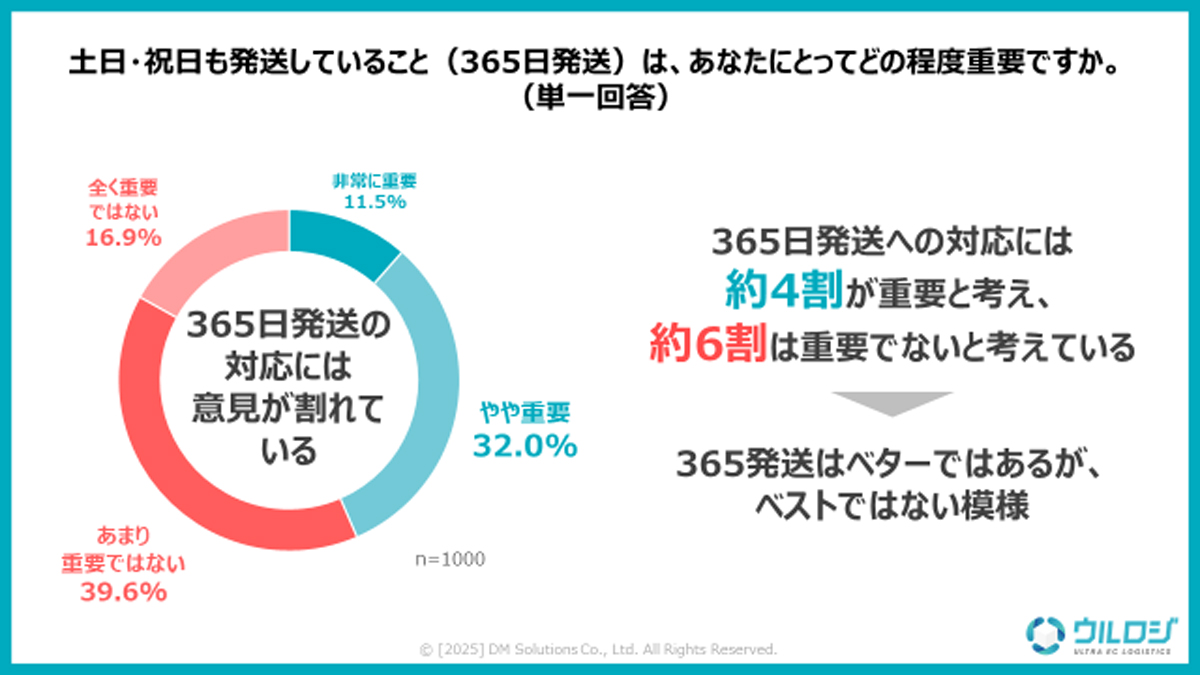
Regarding the importance of shipping on weekends and holidays (365-day shipping), approximately 6% of users consider it "not very important" (39.6%) or "not important at all" (16.9%).
<Percentage of responses to the question "Importance of shipping on weekends and holidays (365-day shipping)">
When asked about their feelings regarding paying shipping fees for purchasing goods, 72.5% of consumers expressed a negative impression of charging for shipping fees, with 25.2% saying they felt it strongly and 47.3% saying they felt it somewhat strongly.
<Percentage of responses to the question "Do you feel uncomfortable paying shipping fees when purchasing goods?">
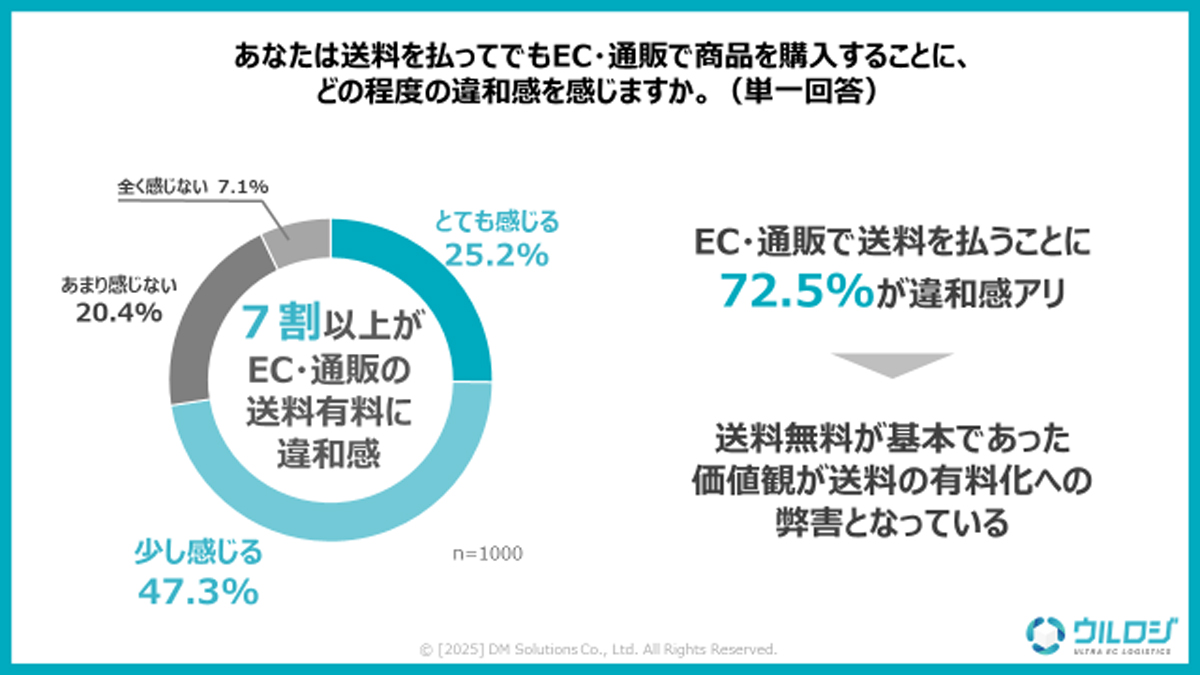
Regarding this, the analysis states, "This result shows that the 'free shipping' culture, which has continued since the early days of the e-commerce market, is deeply ingrained in consumer psychology. While many businesses are considering charging for shipping or raising prices amid soaring logistics costs, they need to be fully aware of the risk that this could lead to strong resistance from consumers."


