


On September 10, Nippon Express, in collaboration with Honda Motor Co., Ltd. and Japan Freight Railway Company (JR Freight), began full-scale operation of long-distance rail transport of Honda-made EV battery packs.
<Scenes from the delivery ceremony. From left: Osamu Sasaki, Executive Officer of Nippon Express; Yuichi Osawa, Executive Officer of Honda; Yasuhide Mugitani, Executive Officer of JR Freight>
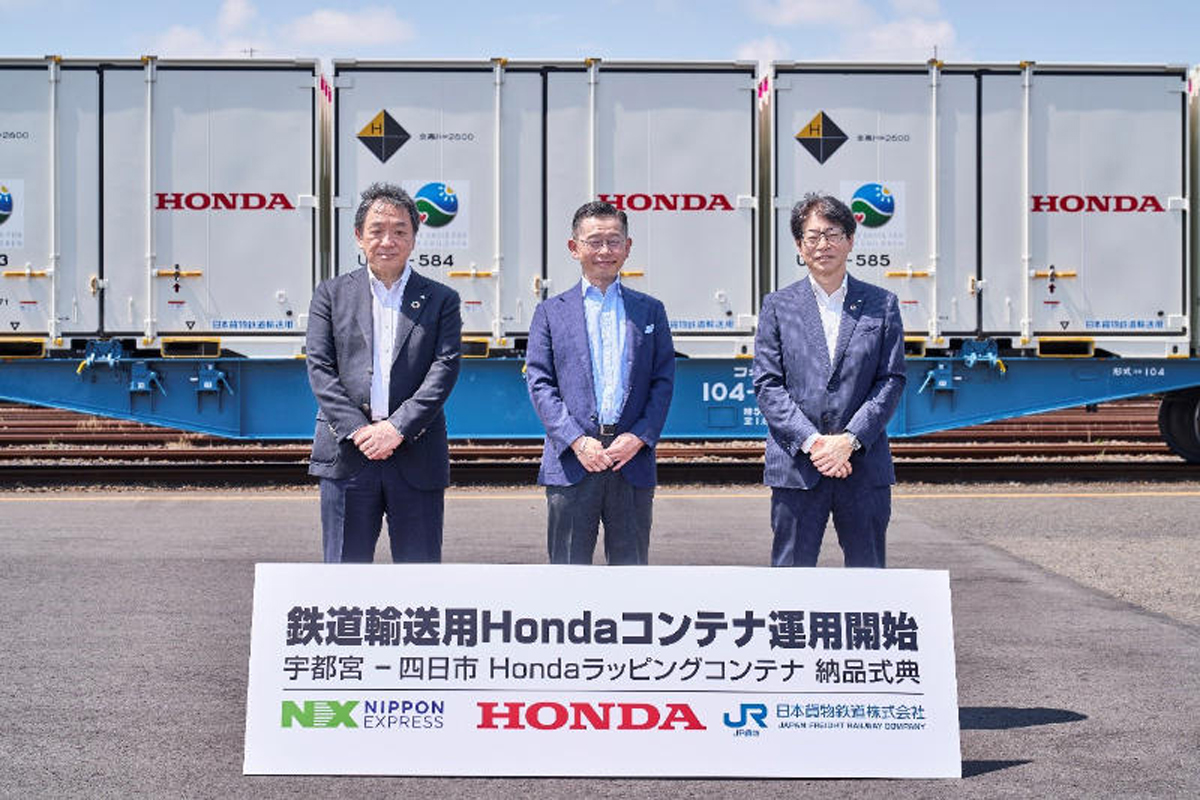
The EV battery packs being transported are intended for installation in Honda's EV, the "N-VAN e:". EV battery packs are large and high-precision components, requiring specialized infrastructure and advanced technology for safe and reliable transportation.
In this modal shift, Honda took the lead in designing and manufacturing loading jigs, Nippon Express was responsible for formulating transportation plans and on-site operations, and JR Freight provided its nationwide railway network and highly reliable transportation system. By leveraging the strengths of each company, a new transportation model was created that combines safety, environmental friendliness, and low cost.
<Image of the transportation area>

This initiative enabled long-distance rail transport of approximately 500 km from Utsunomiya Freight Terminal Station (Utsunomiya City, Tochigi Prefecture) to Yokkaichi Station (Yokkaichi City, Mie Prefecture) for the transportation of batteries from the battery shipping base in Ibaraki Prefecture to the Honda Suzuka Plant in Mie Prefecture where vehicles are assembled.
Compared to the conventional method of transporting all goods by truck, this new system is expected to reduce CO2 emissions by approximately 74.5% (approximately 698.5 tons) annually. In addition, the working hours of drivers associated with long-distance trucking will be reduced by approximately 78.8% (approximately 2,542 hours/year), leading to a reduction in the burden on drivers.
Nippon Express was responsible for designing and building a transportation scheme that utilized rail containers in a series of transportation operations, and addressed conventional logistics challenges such as reducing CO2 emissions and shortening the working hours of truck drivers.
Furthermore, a specially designed container called the "Honda Wrapping Container" has been introduced to facilitate the loading and unloading of battery pack loading jigs, improving both safety and work efficiency.


