


On September 2nd, Nippon Yusen Kaisha (NYK Line) announced that its ammonia carrier, the "BERLIAN EKUATOR," which it owns and which is currently chartered to Mitsui & Co., successfully transported approximately 23,000 tons of liquefied ammonia.
<Operation in progress. From the right: the ammonia carriers "BERLIAN EKUATOR" and "ECO ENCHANTED">
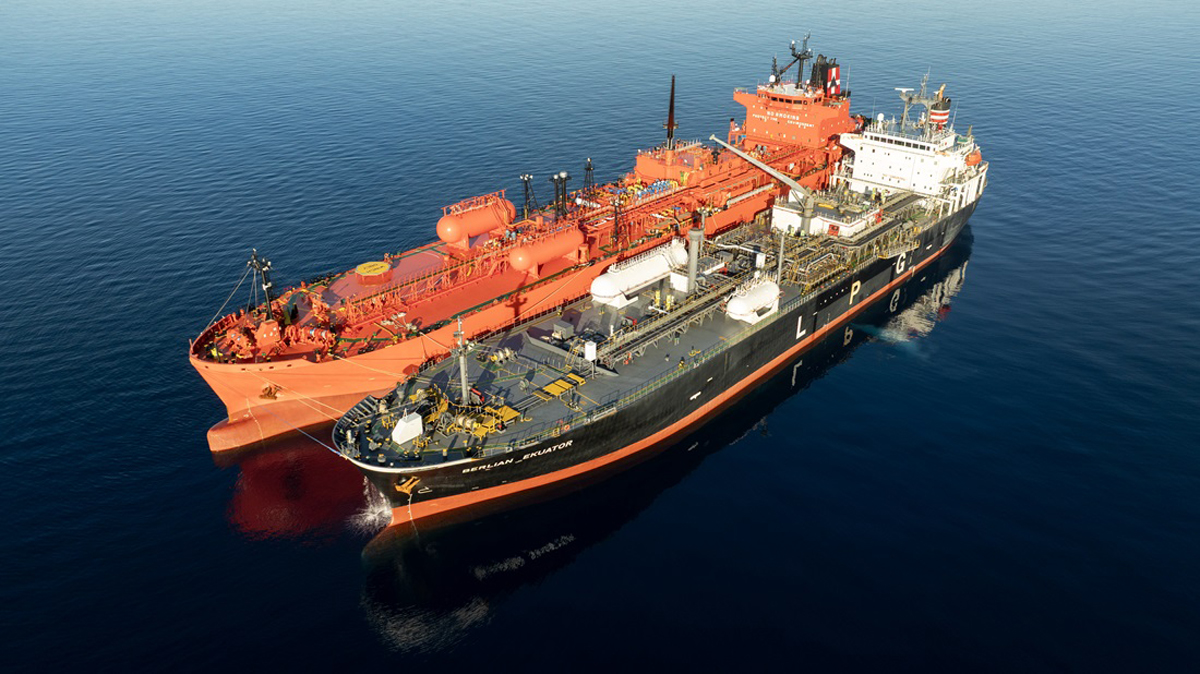
This large-scale transport was carried out on the high seas off the coast of Ceuta, Spain, using a Ship to Ship (STS) method, where cargo loaded on a ship is directly transferred from ship to ship to the ammonia carrier "ECO ENCHANTED," operated by major ammonia trader Trammo.
While the company has experience transporting heavy oil, liquefied natural gas, and liquefied petroleum gas using the STS (Stand-Transfer System) method, this will be its first time using it for liquefied ammonia.
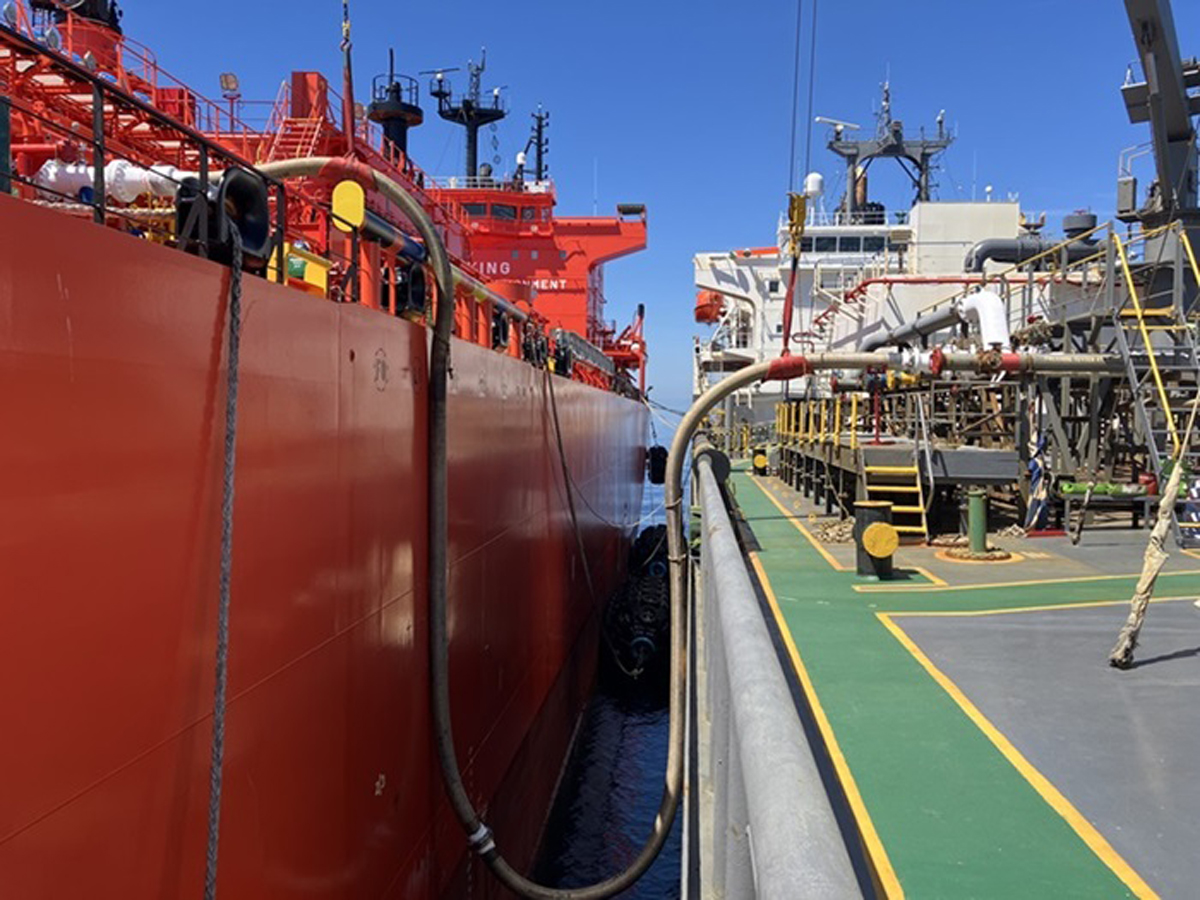
With the support of Trammo, a company with extensive experience in the STS field, and International Fender Providers, a specialist STS provider, the entire volume of approximately 23,000 tons of liquefied ammonia loaded as cargo on the "BERLIAN EKUATOR" was safely transported, utilizing a sophisticated safety management system and STS operational know-how.
<Scenes from the liquefied ammonia transfer operation>
In addition to its existing uses as a fertilizer and chemical, ammonia is expected to be used in a variety of applications, including marine fuel, as a next-generation clean energy source that does not emit carbon dioxide (CO2) when burned.
With future demand expected to increase, the STS (Stock Transfer System) method, which is not constrained by port size or onshore facilities compared to conventional onshore cargo handling methods, is attracting attention as a highly flexible supply method. The success of this operation will be crucial for building an international supply chain for ammonia.
NYK Line stated that it will utilize the knowledge and experience gained through its operations in its future business development, and will continue to contribute to the widespread adoption of next-generation fuels and the establishment of a safe maritime transport system, thereby realizing a decarbonized society.


