


On October 24, the Ministry of Land, Infrastructure, Transport and Tourism held the 56th Planning Subcommittee of the Social Infrastructure Development Council and the 54th Planning Subcommittee of the Transport Policy Council's Transport System Division to deliberate on the final drafts of the next priority plan for social infrastructure development and the basic transport policy plan, covering the period from 2026 to 2030. The final drafts, which include revisions to business practices in the logistics sector and the promotion of behavioral changes among shippers and consumers, were largely approved. After soliciting public comments, the plans are expected to be approved by the Cabinet within the fiscal year.
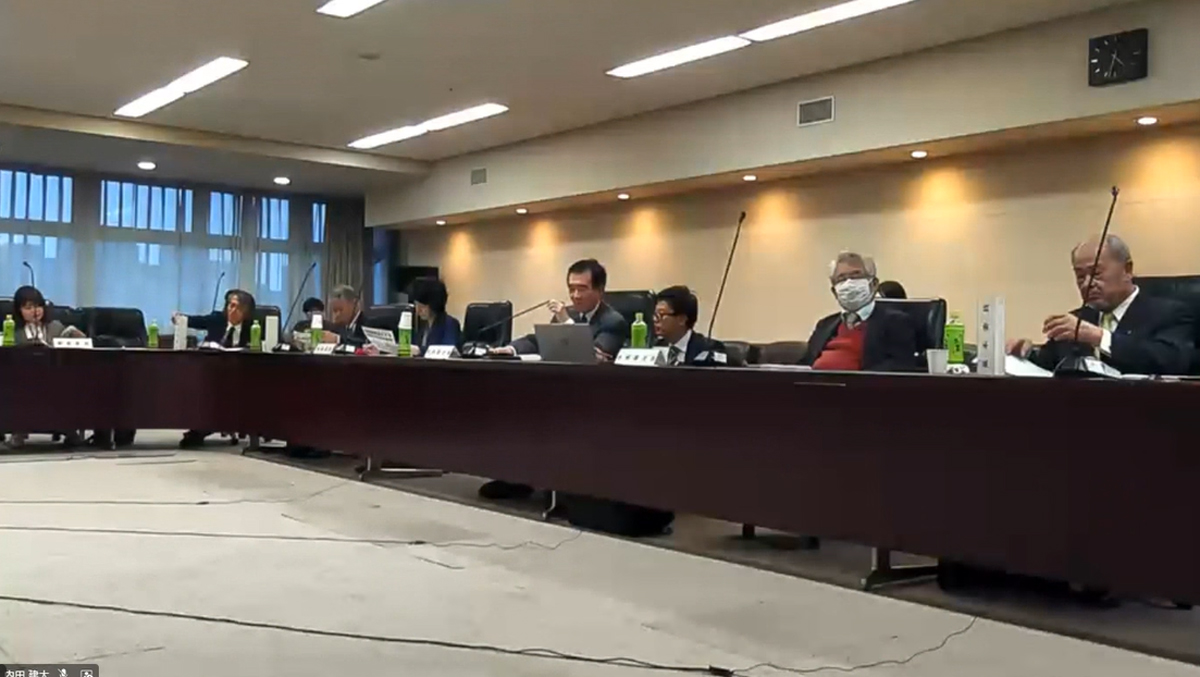
<Scenes from the joint meeting>
The final draft of the Basic Plan for Transportation Policy consists of four main points: "Realizing transportation adapted to local challenges that support local communities" (Basic Policy A), "Realizing a transportation network and system that supports a growth-type economy" (Basic Policy B), "Realizing a strong and flexible transportation infrastructure that supports a sustainable, safe, and secure society" (Basic Policy C), and "Evolving transportation services in response to changes in the times and environment by utilizing the power of digital and new technologies" (Basic Policy D).
<Draft overall structure of the 3rd Basic Plan for Transportation Policy>
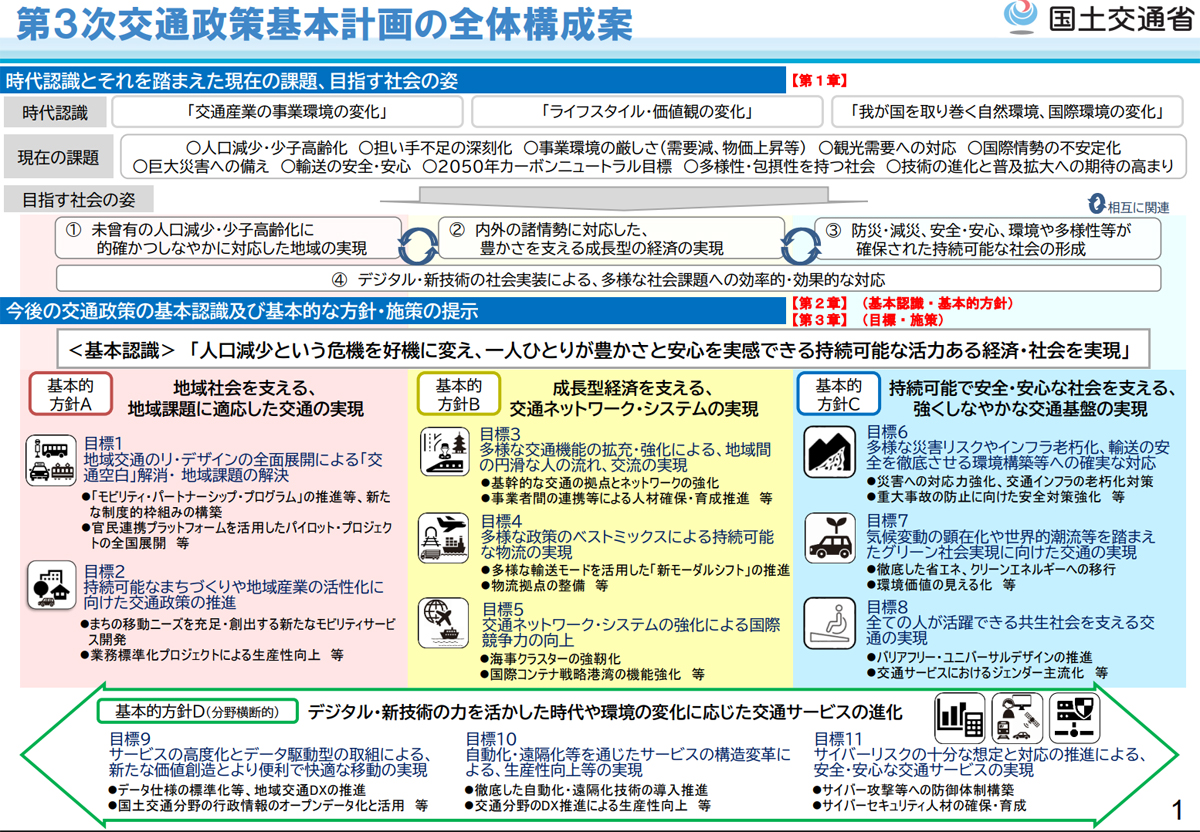
Basic Policy B explains that "in order to achieve sustainable and robust economic growth in Japan, it is necessary to take measures to ensure the smooth flow of people and goods, which are indispensable for economic activity." It then states that, regarding logistics, in addition to soft measures such as efficiency improvements, review of business practices, promotion of behavioral changes among shippers and consumers, and utilization of diverse human resources during the "intensive reform period" for logistics innovation until fiscal year 2030, it is also necessary to promote the development of hard infrastructure such as logistics hubs and logistics networks, which are industrial infrastructure for the entire region.
Regarding new measures to be implemented, the plan includes supporting efforts to improve operational efficiency and reduce labor by assisting in the introduction of machinery that will reduce the burden of cargo handling, as well as aiming to increase the proportion of young people engaged in truck driving from just 10.4% in fiscal year 2024 to the same level as all industries by fiscal year 2030, through measures such as utilizing foreign personnel under the Specified Skills Program.
Furthermore, under the heading of "Realizing sustainable logistics through the best mix of diverse policies," it explicitly states that "Based on the next comprehensive logistics policy outline, we will work on logistics efficiency improvements such as logistics GX including modal shift, logistics DX including the introduction of automated and mechanized equipment, logistics standardization and data linkage including promoting the use of standardized pallets, and strengthening the functions of logistics bases."
Furthermore, the aim is to "promote the improvement of the trading environment throughout the supply chain by strengthening efforts to correct the multi-layered transaction structure and by strengthening corrective guidance by truck and logistics inspectors against malicious acts by shippers, as well as to encourage behavioral changes among shippers and consumers through efforts to reduce redeliveries. In doing so, we aim to foster public understanding that behavioral changes among shippers and consumers, such as reducing redeliveries, will lead not only to economic efficiency and productivity but also to the reduction of logistics and environmental burdens."
The final draft has been largely approved, and after soliciting public comments on the plan, which was prepared under the sole discretion of the chairperson, the aim is to have it approved by the Cabinet within the fiscal year.


