


Nichirei Logistics Group's Logistics Network published a case study of its implementation at TableMark on its website on October 27th.
<TableMark's locations>
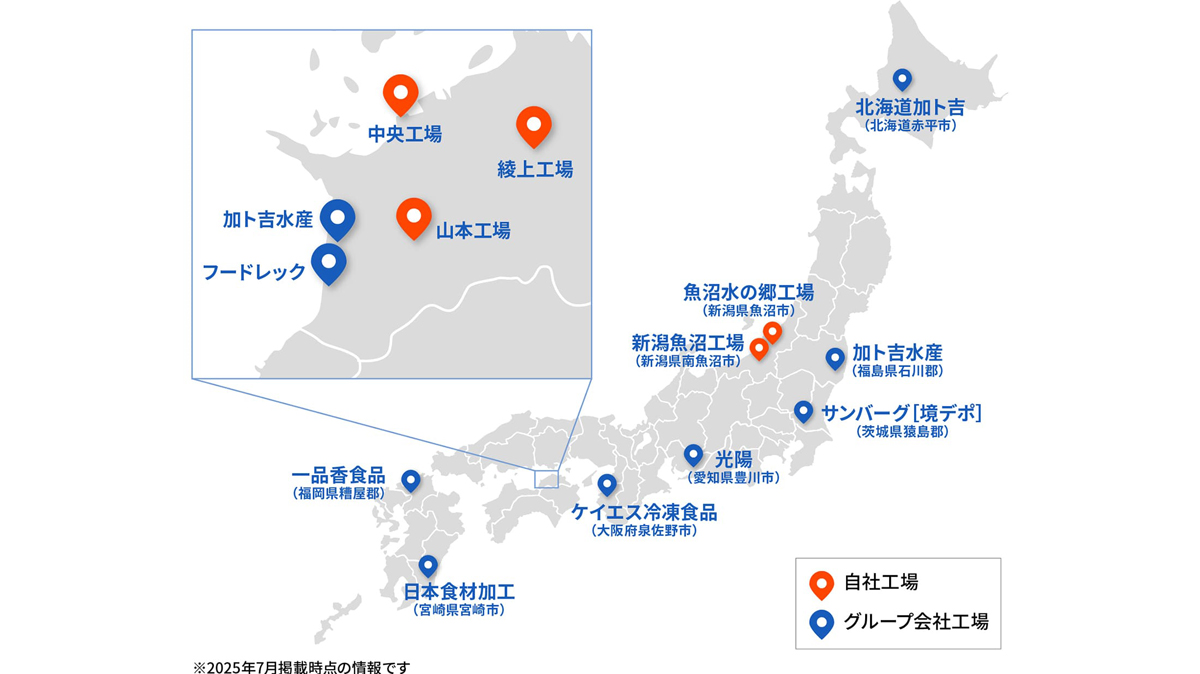
TableMark is a frozen food manufacturer with production bases throughout Japan, from Hokkaido to Kyushu. In the past, in the Kansai area, the logistics system was unable to keep up with business expansion, resulting in a shortage of delivery vehicles during the busy year-end season, which disrupted the stable supply of products.
They then approached several logistics companies, and Logistics Network offered to help. The collaboration began because of their stable delivery system, nationwide logistics bases and assets, and their ability to handle two separate bases in the Kansai area for commercial and residential use.
<Image of "SULS" in operation>
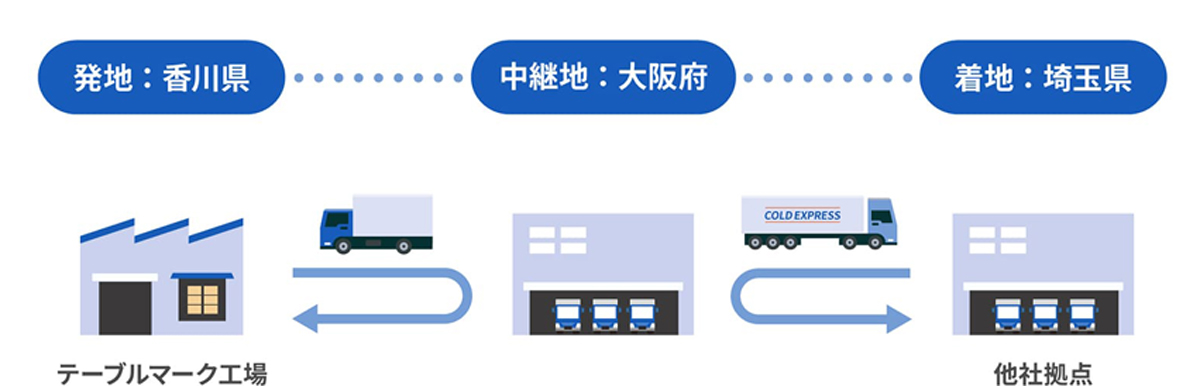
Since around 2018, TableMark has been reforming its logistics to prepare for the "risk of being unable to transport goods," and has introduced a transportation method called "SULS" that uses Osaka Prefecture as a transit point between Kagawa Prefecture, the origin, and Saitama Prefecture, the destination.
This method proposed by Logistics Network involves efficiently switching between cargo platforms during transport, rather than setting up warehouses at intermediate points for temporary storage. Its key feature is that it enables sustainable transportation while suppressing additional costs by minimizing storage.
<Image of collaboration with other companies>
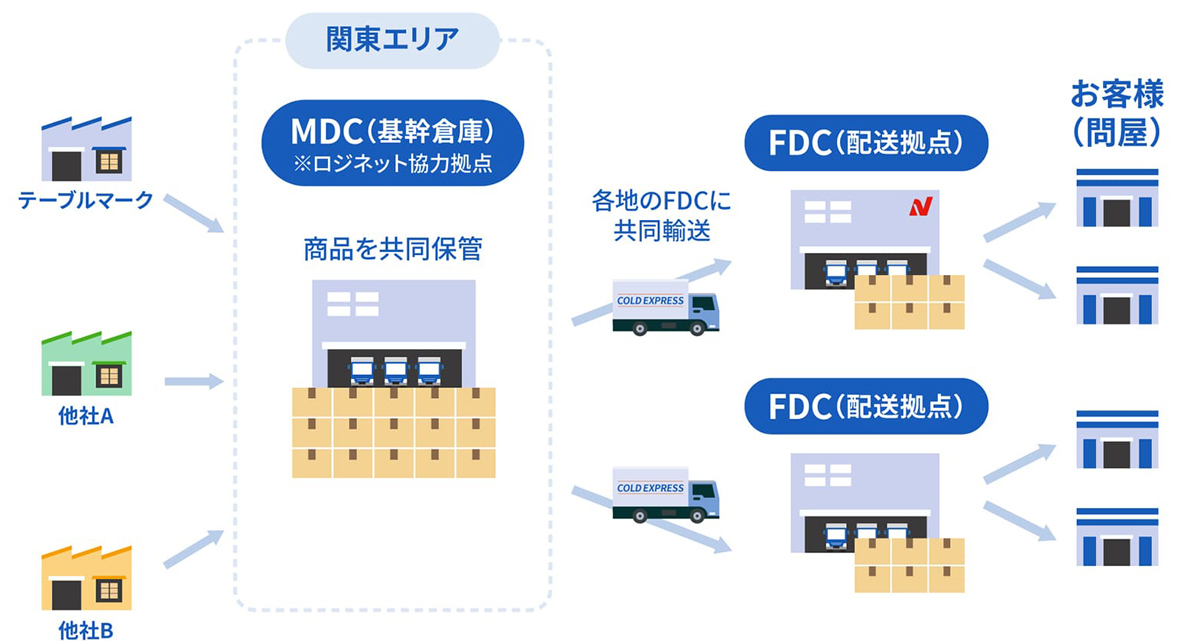
Furthermore, they are also considering "joint replenishment" at distribution centers (FDCs) in each area as they move towards full-scale implementation.
This addresses a challenge that manufacturers have traditionally faced: when each company plans replenishment solely through its own logistics, it cannot ship until a sufficient volume of goods has accumulated, reducing delivery frequency and resulting in an increase in unnecessary inventory to avoid the risk of stockouts.
The planned "joint replenishment" involves establishing a joint main warehouse (MDC) in the Kanto area, where each manufacturer will store their products. Products from multiple manufacturers will then be loaded and transported from the MDC to FDCs in each area for replenishment.
"Joint replenishment" means that shipments that previously had to be carried out individually and fully loaded will now be transported more frequently, often in conjunction with other companies' products. The aim is to reduce inventory levels at each location and improve the cost efficiency of the entire supply chain by increasing the frequency of replenishment.
TableMark states that in order to maintain stable and sustainable logistics, it will continue to formulate and test hypotheses regarding the challenges surrounding logistics.


