


On October 30th, a humanoid robot was introduced for the first time on a trial basis at Tokyo Delivery Service (Ichikawa City, Chiba Prefecture), and footage of the trial was made public. This is a joint project that Yamazen and INSOL-HIGH have been working on since April of this year, aiming to implement humanoid robots in the manufacturing and logistics industries, where labor shortages are accelerating.
<A humanoid robot performing logistics work, unveiled for the first time>
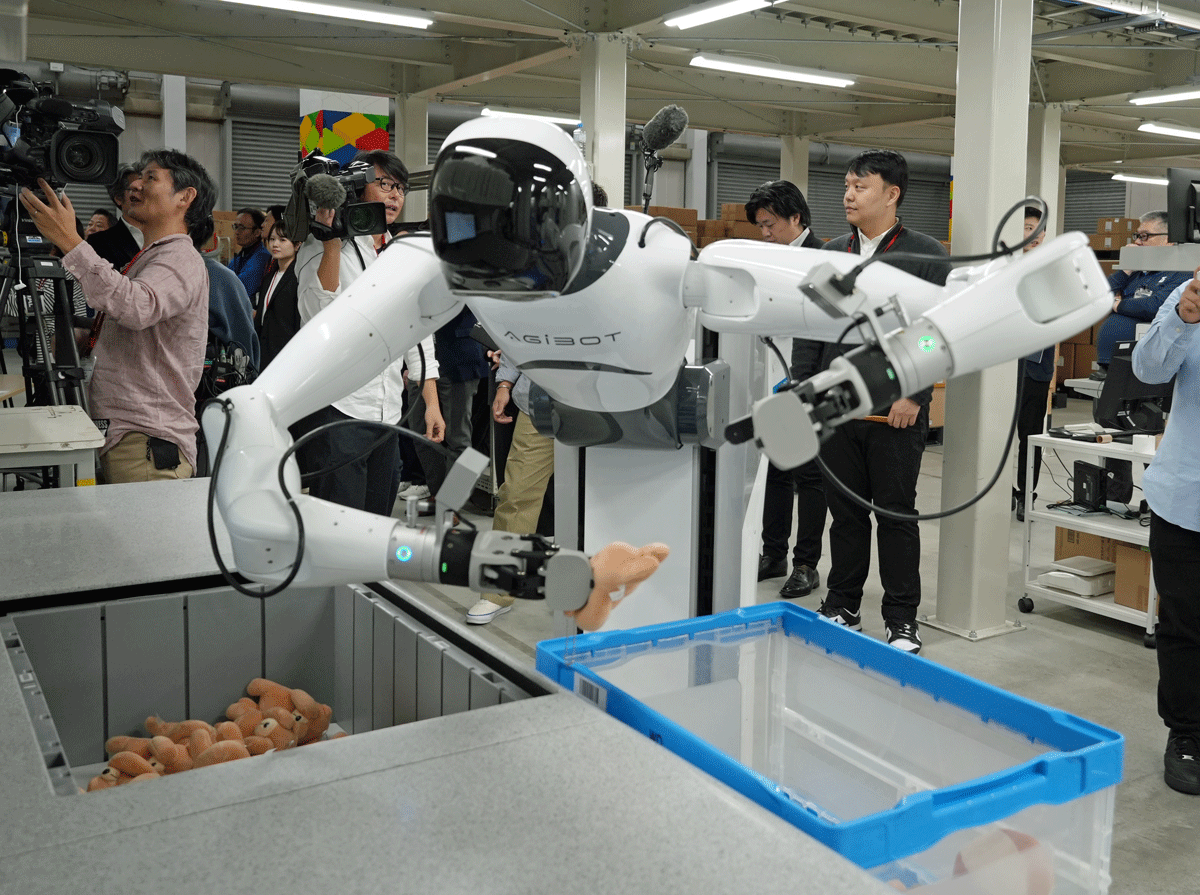
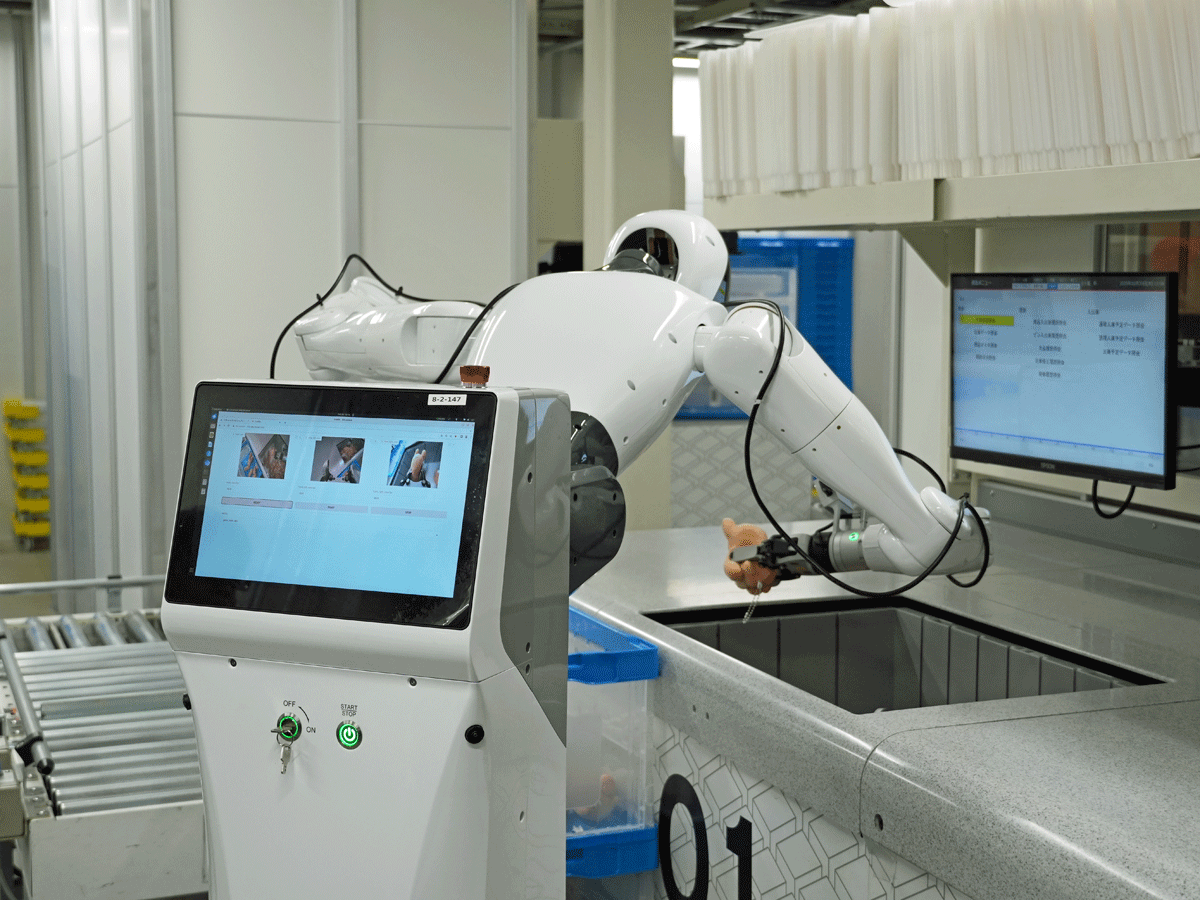
At the Tokyo Delivery Service facility, which served as the venue, a humanoid robot was unveiled for the first time, retrieving packages from boxes that were moving along an automated shelving system in the warehouse. Many members of the press gathered to witness this opportunity to experience the logistics of the future, demonstrating the high level of interest the event attracted.
<From left: Shimada, Managing Director of Tokyo Delivery Service; Kitano, Section Chief of Yamazen; Isobe, CEO of INSOL-HIGH>
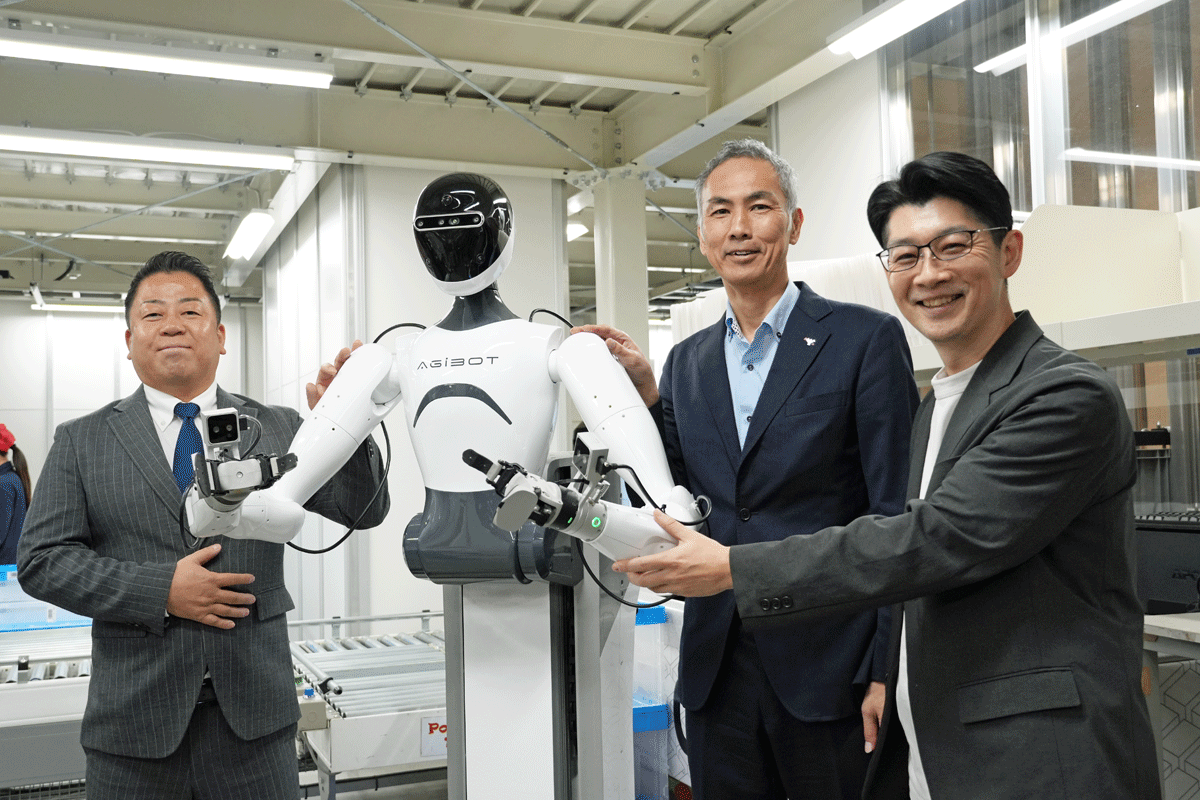
A humanoid robot is a "human-shaped robot," meaning it can perform actions similar to those of a human, making it highly versatile and easy to introduce into existing manual labor sites. It can operate day and night without requiring large-scale facility or equipment modifications, and it has high compatibility with existing automated warehouses and AGVs. The humanoid robot used in this project is from AGI BOT, a Chinese unicorn company. In addition to the robot itself, it features an open platform for learning data.
Tokyo Delivery Service, which faces challenges with labor shortages during peak seasons and at night, participated in this trial implementation. In the trial implementation demonstration, a humanoid robot was shown performing a "pick and drop" task, taking stuffed animals one after another from one box and placing them in another. According to the results of tests conducted in the facility beforehand, the success rate of this task was 97%, and the average cycle time for taking 10 items from each case was a speed of 130 seconds. The arms are adjustable, and the publicly displayed model can handle loads of up to 3 kg with each arm.
<Scenes from the introduction of the humanoid robot during testing: It can pick objects even on first sight and also has a tracking function.>
The demo also showed that even when the humanoid was unable to pick up a stuffed animal, it would adjust its gripping angle and continue working without stopping. Furthermore, it was able to pick up and drop objects other than stuffed animals on its first try, and it even tracked and picked up objects that rolled or moved around inside the box, showcasing its autonomous movements and reactions that gave a glimpse of its "humanoid" nature.
Yamazen and INSOL-HIGH concluded a business partnership in April of this year. Yamazen, a specialized trading company mainly dealing in production and consumer goods, focuses on robotization and labor-saving in factories and warehouses, and is developing a business that solves users' problems in a one-stop manner. Regarding the humanoid robot, Section Manager Mineaki Kitano said, "Its greatest feature is its high compatibility with other equipment. It can flexibly handle tasks that were previously difficult to replace with human labor, and will be a new option for the future. This field demonstration has given us renewed confidence in its social implementation."
INSOL-HIGH, a partner collaborating with the company, has built a platform specializing in humanoid robots. They offer logistics-focused services such as WES development, and both companies are working together to accelerate early social implementation. With this trial implementation, CEO Munekatsu Isobe says they have "reached 8% of the way." He adds that a key point going forward is that "high-quality and large amounts of training data are essential to make humanoid robots move autonomously. This data collection is precisely the key to success in the use of humanoid robots in Japan."
Therefore, the two companies plan to launch a "Physical Data Generation Center" in the spring of 2026. The center will be a large-scale training facility where up to 50 humanoid robots can operate simultaneously, and the location is currently being selected. Aiming for 10 participating companies, the center will be operated as a cross-industry consortium with manufacturing and major logistics companies to collect data. The goal is to implement the technology in society by the end of fiscal year 26, with the aim of "realizing a society where humans and robots coexist and collaborate."
Ryoji Shimada, Managing Director of Tokyo Delivery Service, said, "Stopping logistics poses a social risk. We have high hopes for equipping humanoids with AI and training them. Logistics is still a labor-intensive field, and we'll see how much humanoids can contribute to the future. There are challenges, but working on it now will be a stepping stone for the future." The idea of humanoids driving logistics is not a distant future; the first step is about to begin.


