


On November 18th, Laputa Robotics held a seminar led by Seiji Onozuka of Roland Berger, who serves as the company's logistics strategy advisor.
<Roland Berger, Mr. Seiji Onozuka>
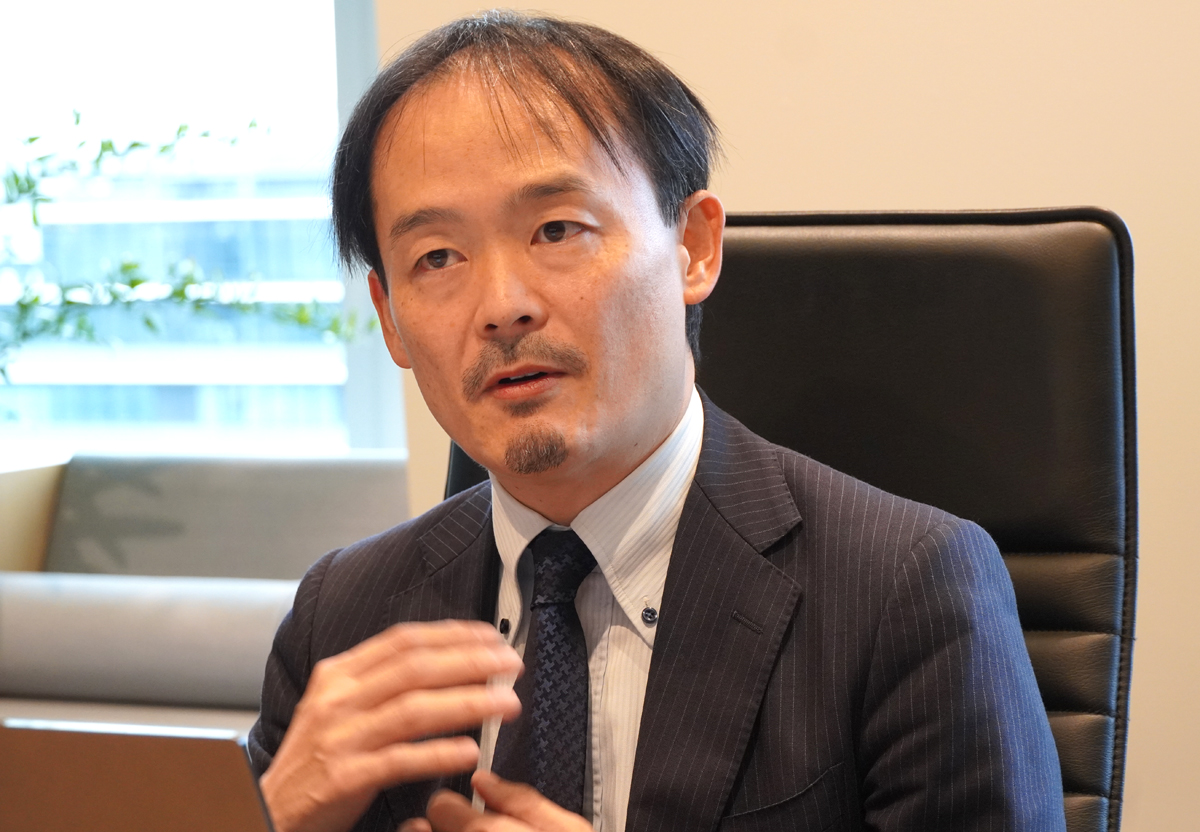
In this seminar, Mr. Onozuka focused on the "Chief Logistics Officer (CLO)" position established by the government based on the Logistics Efficiency Law, in light of the challenges facing logistics in 2024. He shared his views on the current state and future of supply chains.
Mr. Onozuka works at Roland Berger, a corporate management consulting firm, primarily focusing on logistics and supply chains. He gives lectures related to the Ministry of Land, Infrastructure, Transport and Tourism's (MLIT) CLO (Chief Logistics Officer) formulation, and also provides support to logistics companies and advises manufacturers on structural reforms.
Furthermore, regarding the content of this statement, it is stated at the outset that "while I am expressing my frank opinions, these are personal comments and do not represent the views of the country or any company."
The seminar proceeded primarily with questions submitted in advance by journalists. Topics discussed included the upcoming revision of the Logistics Efficiency Act, the appointment of a CLO (College Ledger), and key points necessary for improving supply chain productivity.
Regarding the Logistics Efficiency Improvement Act, which was partially implemented in April 2025, he stated that it is "a groundbreaking law that regulates the shipper side for the first time in history," and commented that "in many cases, efficiency improvements have not progressed because the consignee was the root cause, especially in retail," indicating that this new law takes a crucial step towards improving the overall efficiency of the supply chain.
He touched upon the point that "what shippers should be responsible for is not just the logistics department's efforts, but also the need for assistance from procurement, sales, and marketing departments, as well as from external sources such as business partners," and stated that "legally designating a 'logistics manager' equivalent to an executive is necessary for optimization across departments."
<Flow of legal revisions related to logistics>

He also mentioned that while the mandatory appointment of CLOs and submission of medium- to long-term plans from April 2026 onwards applies to "specified businesses" and "specified shippers" whose logistics inbound and outbound volumes exceed a certain number, other "non-specified businesses" are also obligated to make efforts to improve efficiency as of April 2025. Regarding this, he stated that rather than pursuing efficiency improvements simply because the government requests it, logistics efficiency improvements will be an advantage in terms of corporate competitiveness, and therefore, "it is certainly better for non-specified businesses and non-specified shippers to promote overall efficiency improvements."
When asked for information that would be helpful regarding the appointment of a CLO and the formulation of medium- to long-term plans, he cited the portal site for the Logistics Efficiency Improvement Act created by the Ministry of Land , Infrastructure, Transport and Tourism, commenting that it contains useful information such as "companies subject to the obligation," "criteria for formulating medium- to long-term plans," and "precedents for overall efficiency improvements." While acknowledging that it is very useful, he also acknowledged that its low awareness is a challenge and expressed his hope that it would become more widely known.
<Emphatically emphasizing the importance of overall optimization>
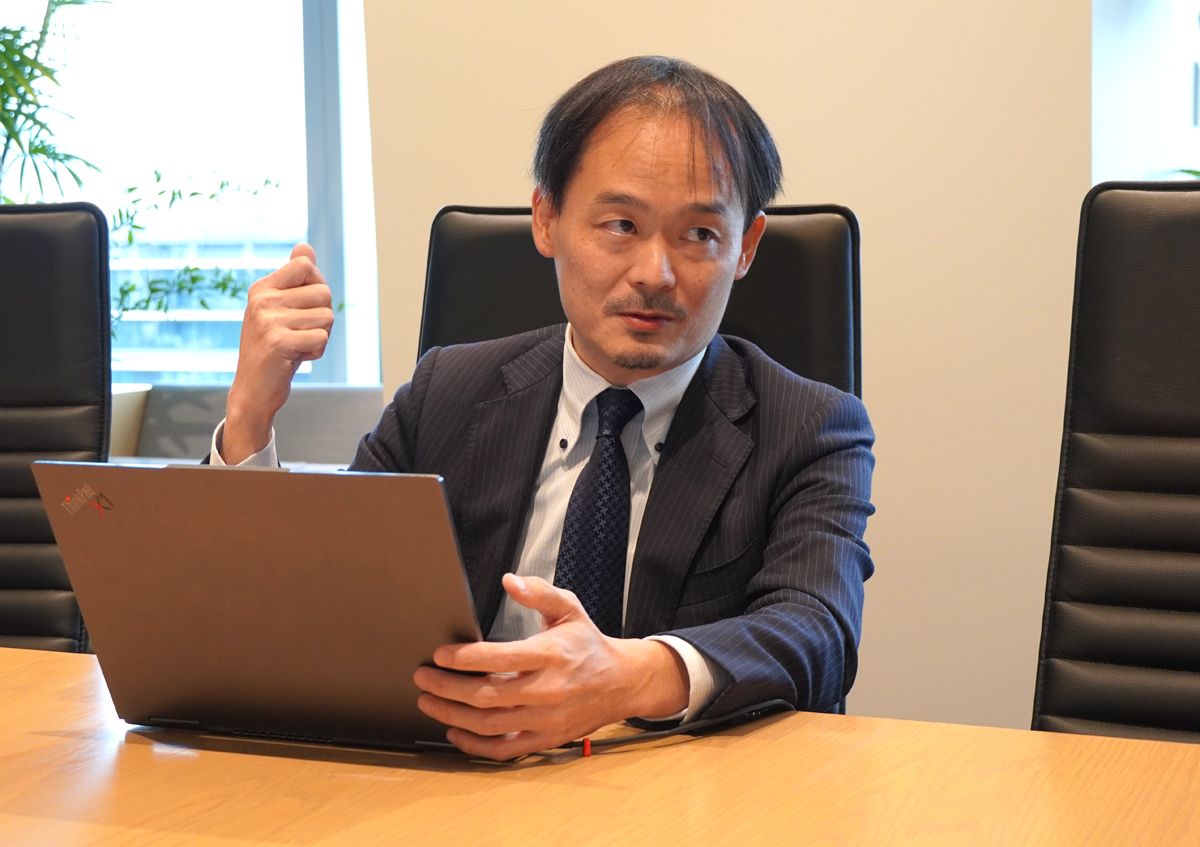
Furthermore, the report identified several points that are often overlooked when formulating medium- to long-term plans, including "paying attention to areas other than logistics (production, procurement, sales, etc.)", "considering efficiency improvements beyond reducing waiting times and increasing per capita transport volume as stipulated in the regulations", and "paying attention to cost increases in other departments resulting from logistics cost reductions." In particular, regarding costs in other departments, the report cited examples such as increased warehousing costs when the number of transports is reduced, and stated that overall company profits may not increase as much as expected.
Furthermore, regarding the implementation after the plan is formulated, the speaker proposed "specifically defining the implementation deadline and responsible persons to prevent the plan from falling through" and "praising the departments that bear the burden and creating a structure where those who work hard are rewarded." As a concrete example of praise, the speaker cited the example of a company famous for instant ramen, which created a system to evaluate the production department when improving logistics efficiency. This led to effective suggestions coming from the production department as well, creating a structure where efficiency improvements were mutually promoted.
Finally, when asked about the goal span for the remaining five years from the perspective of Mr. Onozuka, who participated in the logistics plan set by the Ministry of Land, Infrastructure, Transport and Tourism for 2030, he replied, "The next theme is autonomous trucks. While the industry is looking beyond 2030 for complete widespread adoption, there are two goals set for 2030. One is to avoid a situation where goods cannot be transported in 2030. The other is for around 1000 autonomous trucks to be introduced, and for them to become so widespread that each introduction doesn't make the news." Regarding practical application in particular, he said, "1000 is a tiny number compared to the total number of trucks running throughout Japan, but I think it's a challenging number for autonomous trucks," adding, "Given that they are actually being used in the United States and China, it shouldn't be technically impossible."


