


How to utilize and nurture Generation Z (23)
With the labor shortage becoming more severe, and recruitment becoming increasingly difficult, especially for drivers in the logistics sector, we are shifting from being the ones who "choose" to being the ones who "are chosen."
In this day and age, even if you manage to hire someone, they can easily quit. The old-fashioned methods of training and mentoring, such as "persevere for three years," "be patient and endure," and "learn by observing your seniors' work methods," are no longer effective.
With Generation Z becoming the dominant generation, the way we accept, train, and retain new employees now requires a supportive approach that respects their individuality, encourages autonomous growth, and is tailored to their needs.
■ "People" are the most important management resource.
In the first installment of this series , I mentioned the idea that "People are the heart of Business."
There is no doubt that "people" are the most important management resource for a company to grow. At the heart of logistics management is "strategies for developing and securing human resources," and it is necessary to improve logistics service capabilities in a broad sense and win the competition with this advantage.
In this series, with the goal of "creating a vibrant workplace where all employees, including young workers and part-timers in the logistics field, can learn in a fun and cheerful atmosphere, where people can grow and improvements can be made," we have introduced "how to create a strong and effective logistics site" by focusing on human resource development at the management and supervisory level (plus team leaders and supervisors).
I've tried to present practical content so that you'll feel like "Let's try this right away," but what do you think?
■ Start by improving organizational management.
Before we can even begin developing human resources, I believe that we ourselves must earn the trust of our members, inspire them to cooperate with us, and engage in dialogue to ensure that their personal values align with the company's goals. Otherwise, nothing can begin, and we won't achieve any results.
To achieve this, it's necessary to change how we interact with them to better understand them, to increase communication, and to make organizational management more participatory.
Let's start by changing the workplace culture (atmosphere: teamwork, cheerfulness, positive attitude, etc.). In the initial stages, the following three things are important:
(1) Creating a bright workplace where trust can be built
Taking the lead in mutual communication is crucial. For example, greetings and expressions of appreciation, addressing people by name, and avoiding favoritism, discrimination, and neglect. It is important that we practice being cheerful, energetic, honest, and treating everyone equally.
If you feel you are still not doing enough, try reaching out to your team members at least 30 times a day, as mentioned in the fourth installment (Workplace Revitalization 5-Point Set).
Mr. N, a manager at a certain company in the northern Kanto area, diligently put this into practice and transformed into a popular and well-regarded manager, leading to a rapid improvement in performance. He gained the trust of everyone in the sales office and created a bright and vibrant workplace where young employees and newcomers did not feel lonely or isolated. The number of employees leaving the company decreased, teamwork improved, and customer evaluations also turned positive.
In addition, the "greeting, praising, and acknowledging" practices introduced in the second installment are also perfect for creating a vibrant workplace.
(2) Creating a workplace that boosts motivation
General encouragement alone won't keep people motivated. Even if it's just small, make sure to communicate their growth in concrete tasks so that they feel happy and confident. Actively praise and commend them, coach them, express gratitude, and motivate them. The goal is to boost their motivation through on-the-job training (OJT) so that it leads to the next step in their growth.
As an effective method, I have recommended introducing and revitalizing improvement suggestion activities in this series. I encouraged each person to submit one improvement suggestion every month, and as an incentive to show appreciation for the suggestions, I prepared a reward of 100 yen per suggestion. I also exchanged opinions on the results through one-on-one meetings, morning and afternoon meetings, and conferences. There are countless ways to recognize and support success and move on to the next step.
Having just one improvement suggestion each month allows team members to take initiative in their daily work, work towards goals, and experience a sense of accomplishment from the results. This can also guide them towards proactive and sustainable motivational activities.
As these dialogue activities become more active, motivation increases, and as mentioned in the fifth installment , the organization develops into a team where everyone can "come to work energetically and go home with a smile."
(3) Creating a workplace where self-realization is encouraged
Once you've created a positive workplace environment where trust can be built, it's time for the next step. Remember Maslow's Hierarchy of Needs, which we introduced in Part 2 .
American psychologist Dr. Abraham Maslow defined Level 3 as "a level where employees feel friendship, affection, organizational connection, and teamwork in the workplace." In more recent terms, it's "a state where workplace engagement has begun to develop."
Dissatisfaction and lack of motivation at work have subsided, and the number of employees leaving the company has decreased. From an organizational management perspective, this indicates that the company has begun to move towards a desirable foundation.
We must not stop here. Our role is to improve organizational performance, maximize customer and corporate value, meet client expectations, and promote the growth and development of the company.
We must raise everyone to level 4 or higher of Maslow's hierarchy of needs (a state where ego needs are being met), and further to level 5 (a state where self-actualization needs are met, a sense of purpose is gained, individual potential is maximized, and both individuals and the organization experience personal growth at the top level in their respective industries).
So, how should we approach improving organizational management?
<Figure 1>
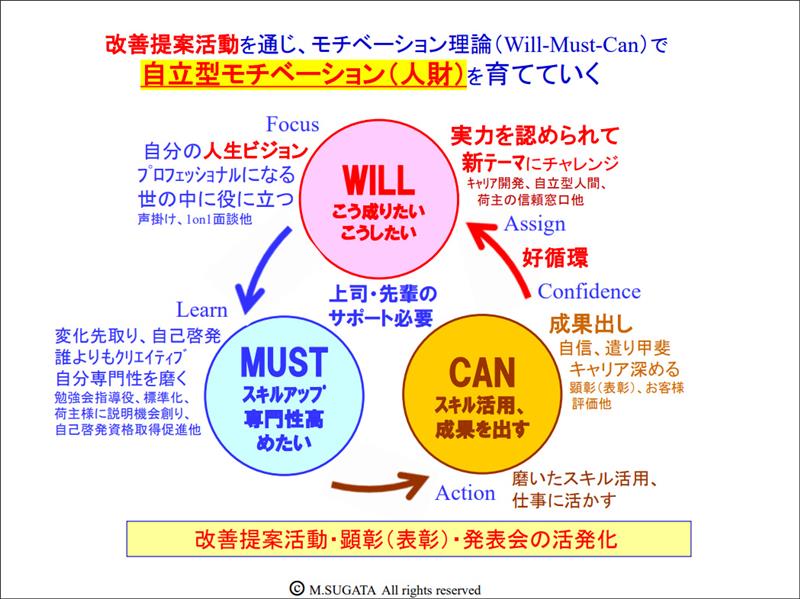
A helpful way to gain insights is the activity diagram in Figure 1. This diagram is a conceptual behavioral diagram that is considered effective when training new and young employees. It is easy to understand and very well done, so I would like to introduce it.
First, there's the "WILL:Focus Step." This step is designed to draw out the initiative of the members by asking them how they envision their own lives.
Even if we want to do something for someone, it won't resonate if they're not interested. In one-on-one meetings and team meetings, draw out their desires and aspirations. The ability to listen is a crucial initial step in building trust.
Next is the "MUST: Learn Step." This step involves how to improve skills and acquire expertise in order to realize the vision. As leaders, we provide advice and hints to guide individuals to learn on their own.
I made a point of appointing serious and hardworking individuals (especially younger employees), even if their skills were still lacking, to roles such as instructors for study groups or leaders in creating standard manuals and training materials. I dedicated myself to developing self-motivated individuals so that they could improve themselves and become leaders in the workplace.
The third step is "CAN: Action Step." This step provides opportunities for employees to excel, such as by assigning them tasks that allow them to utilize their accumulated expertise to produce results.
We have implemented a PDCA (Plan-Do-Check-Act) training cycle that involves preparing tasks that match the individual's future aspirations and level of accumulated expertise, encouraging them to take on challenges, acknowledging their results, and praising their achievements, even if they are small tasks.
As an example of CAN activities, we have continued to hold award ceremonies for the improvement suggestion system to celebrate the efforts of individuals and teams.
Furthermore, when we caused inconvenience to a shipper due to a shipping error, we arranged a meeting where every worker who filed a complaint could explain their preventative measures to the shipper's manager one by one, demonstrating their determination and commitment to creating a system to ensure the same mistake never happens again. For me, as the manager, it was a gamble whether we could convince the shipper, but for the entire team, it was a very nerve-wracking but unforgettable learning experience.
<Figure 2>
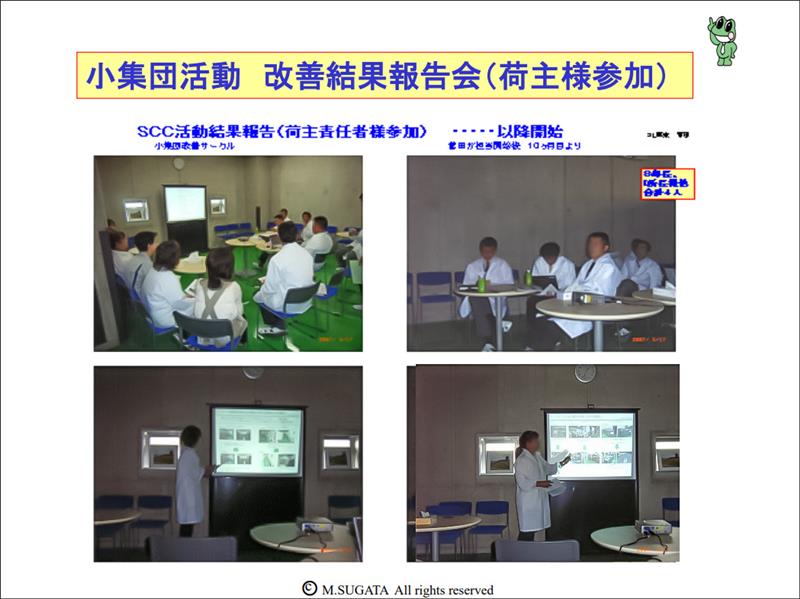
Figure 2 shows a small group activity at a certain company, specifically a meeting to report on improvement results. It wasn't always smooth sailing; when the activity process or results were unsatisfactory, guidance and support were sometimes provided in a way that didn't damage trust.
The results of "CAN" boost an individual's confidence and lead to a positive cycle of being assigned to more important responsibilities and tasks. When individuals feel that they are valued and respected, their work becomes more interesting, motivating them to work harder and be more innovative, and they develop into self-sufficient professional talent. This also leads to better employee retention.
Next time will be the final episode. As a summary, I will discuss human resource development.
■Series: Human Resource Development that Transforms the Workplace


