


Teikoku Databank (TDB) announced the results of its survey on the impact of Trump tariffs on corporate performance (for fiscal year 2025) on November 25.
<Responses to a survey on the impact of Trump tariffs on 2025 business performance>

The results are based on a survey of companies regarding the outcome of the tariff negotiations between the Japanese and U.S. governments, known as the "Trump tariffs."
According to the survey, approximately one-third of companies expect a decline in profits. 18.3% expect a "minor decline" of less than 5%, 12.1% expect a "slight decline" of around 5-10%, and 3.0% expect a "significant decline" of 10% or more. In total, 33.4% of companies responded that they "expect a decline in profits."
Furthermore, a significant 34.4% of respondents answered "I don't know," clearly dividing into three categories: "No impact," "Decreased profits," and "I don't know." On the other hand, only 0.7% of respondents said they "expect increased profits," indicating that there are almost no examples of Trump tariffs having a positive impact on business activities.
<Percentage of companies expecting a decline in profits, broken down by industry>
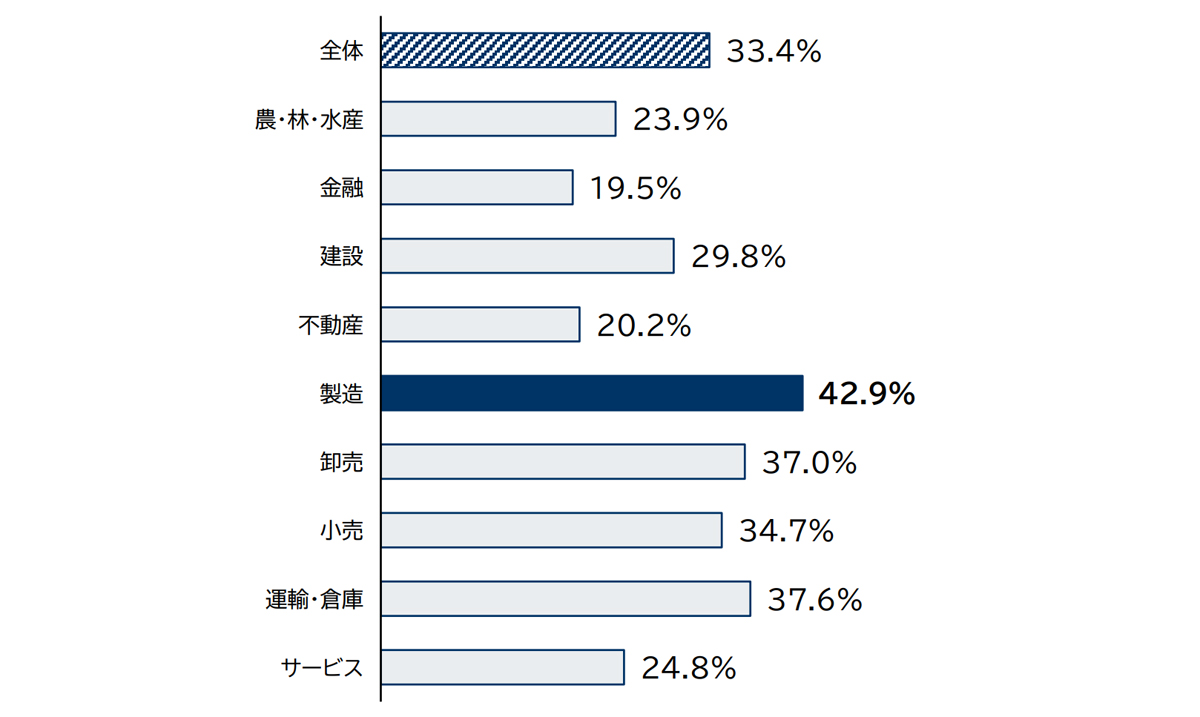
As mentioned above, the percentage of companies expecting a decline in profits overall was 33.4%, but when broken down by industry, "manufacturing" topped the list at 42.9%. Within "manufacturing" in particular, "transportation equipment manufacturing," which is related to automobile manufacturing, had an extremely high figure of 55.2%.
"Transportation and warehousing" was the next most common sector at 37.6%, followed by "wholesale" at 37.0%, and "retail" at 34.7%.
The four industries listed above were the ones with the highest figures, and since all of them are industries heavily involved in the supply chain, this result suggests that the entire logistics system has been significantly affected.
These results highlight the current situation where the global trade friction caused by Trump's tariffs is posing a considerable risk to business activities as a whole. As concerns about the negative impact on supply chains and exports gradually become apparent, these results strongly reflect the fact that the specific scope of the Trump tariffs and the development of U.S. protectionist policies remain unclear.


