


On November 25, Nippon Yusen renewed its Memorandum of Understanding (MOU) regarding a strategic partnership with BHP Group (BHP), one of the world's largest mining companies headquartered in Australia, which was signed in June 2022.
<Scenes from the MOU signing ceremony. Emma Roberts (left), Vice President, Maritime & Supply Chain Excellence, BHP; Hiroaki Nishiyama, Managing Executive Officer, Head of Dry Bulk Business Division, Nippon Yusen>
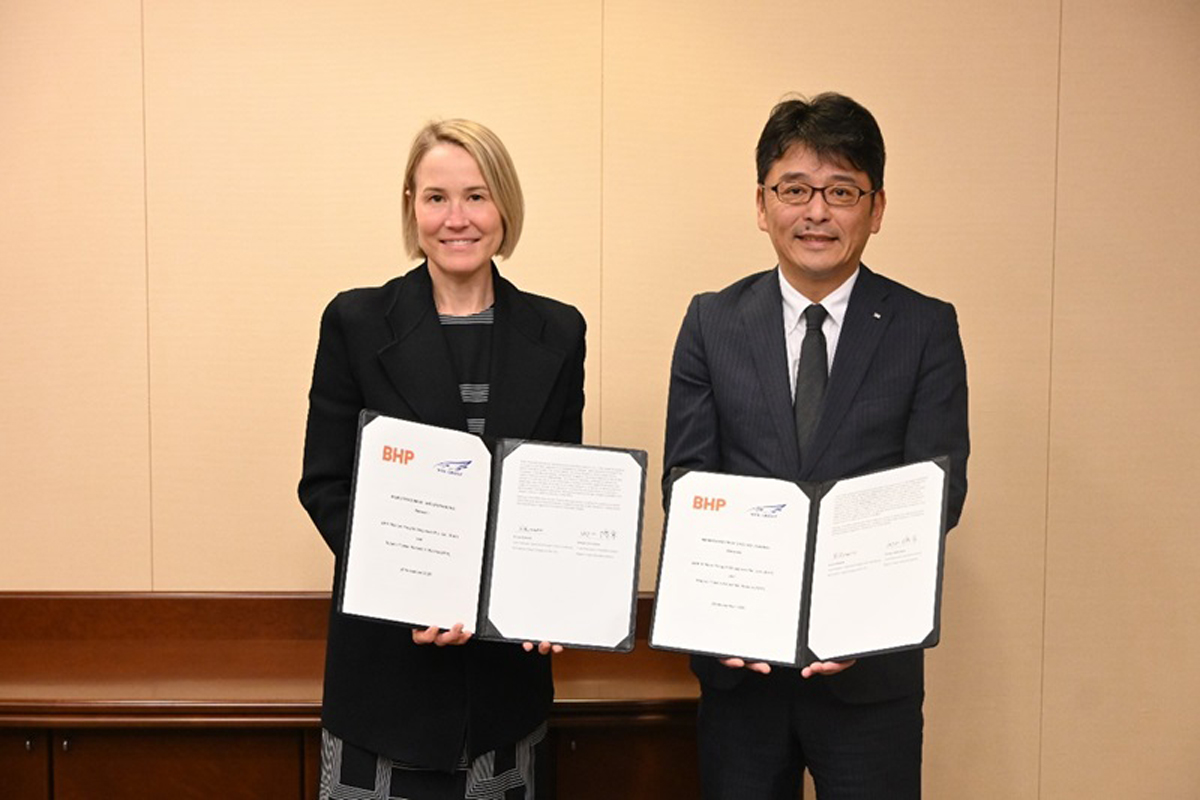
This renewal of the MOU aims to strengthen collaboration with the goal of promoting decarbonization and ensuring safe operations.
Furthermore, the scope of collaboration has been revised and strengthened to include "continuation of joint research on ammonia dual-fuel vessel technology," "promotion of biofuel trials," and "improvement of safety through the supply of our high-quality vessels for the maritime transport of a wide range of dry bulk cargoes."
Nippon Yusen stated that through this renewal of the MOU, it will lead the decarbonization and safe operation of the entire dry bulk industry and promote efforts toward achieving its net-zero target by 2050.
BHP Vice President Emma Roberts commented, "We are delighted to have the opportunity to further develop our long-standing strategic partnership with NYK. We share a common responsibility to remain innovative in order to accelerate safety, technology, and sustainable performance across the entire shipping industry. As the world's largest bulk charterer, BHP is eager to work with its partners to create a safer, technology-driven, and more efficient maritime industry."
Furthermore, Hiroaki Nishiyama, Senior Managing Executive Officer of Nippon Yusen, stated, "We are very pleased to further strengthen our strategic partnership with BHP and to cooperate in promoting decarbonization and safe operation in the dry bulk industry. Amidst the uncertain outlook for environmental regulations, we will combine the strengths of both companies and accelerate the development of next-generation environmentally friendly technologies, steadily moving towards achieving our 2050 net-zero target."


