


Sapporo Group Logistics and TS Network, both group companies of Sapporo Holdings, and Nippon Express, a group company of NIPPON EXPRESS Holdings, will begin joint rail transport using 31-foot containers from December 2025, with the aim of securing stable transport capacity and reducing environmental impact.
<Transportation process>
<Flowchart>
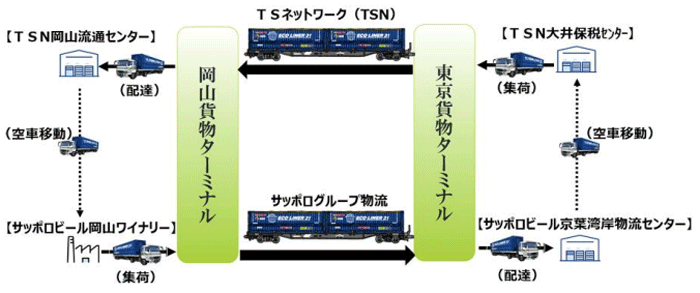
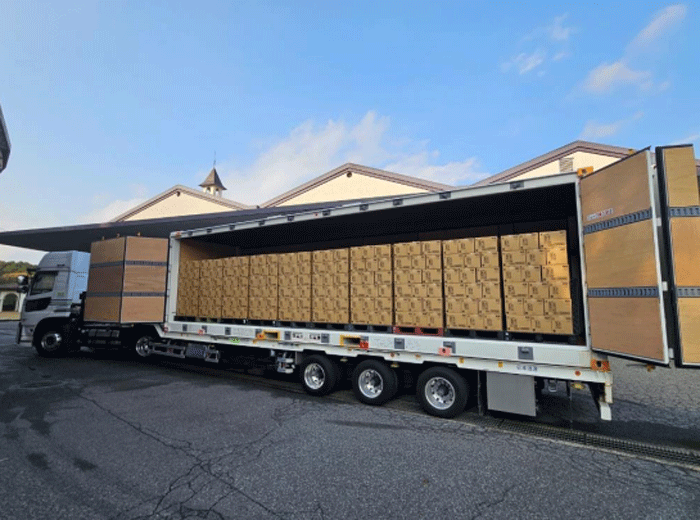
In this scheme, Sapporo Group Logistics will transport products from Sapporo Beer Okayama Winery to Sapporo Beer Keiyo Bay Area Logistics Center (Chiba), and TS Network will transport products from Oi Bonded Warehouse Center (Tokyo) to Okayama Distribution Center, both by rail using 31-foot containers.
This will increase the loading rate on both the outbound and return journeys and reduce the return trip of empty containers. By shifting to rail transport, we will achieve both stable transport capacity and reduced environmental impact.
The stated benefits include addressing the truck shortage and strengthening business continuity planning (BCP). By replacing long-distance routes with rail transport, the company will reduce drivers' working hours by approximately 1400 hours per year, preparing for future labor shortage risks, and achieving stable supply (BCP) through the diversification of transport modes.
Furthermore, in terms of improving transportation efficiency, round-trip transportation between different industries will enhance loading efficiency on both the outbound and return journeys, reducing empty return trips. This will promote efficient use of transportation costs and resources.
Furthermore, in terms of reducing CO2 emissions, switching from truck transport (approximately 678 km) to rail transport will reduce CO2 emissions by approximately 1167 kg per trip (a reduction rate of 76.9%) for both companies. An annual reduction of approximately 168 tons is expected.
Going forward, the three companies will position this initiative as the first step in a continuous collaboration and will work to build a sustainable transportation network while holding regular discussions to address future logistics challenges such as truck shortages and natural disasters.


