


On December 9, NTT Logisco announced the introduction of an "automatic registration and sorting system using AI image recognition technology" for its refurbishment operations of rental communication equipment, which automates the registration and sorting of returned items.
Refurbishment is the process of restoring products that have been returned due to initial defects or other reasons to be as good as new.
<Efficiency improvements through automated collection registration and sorting>
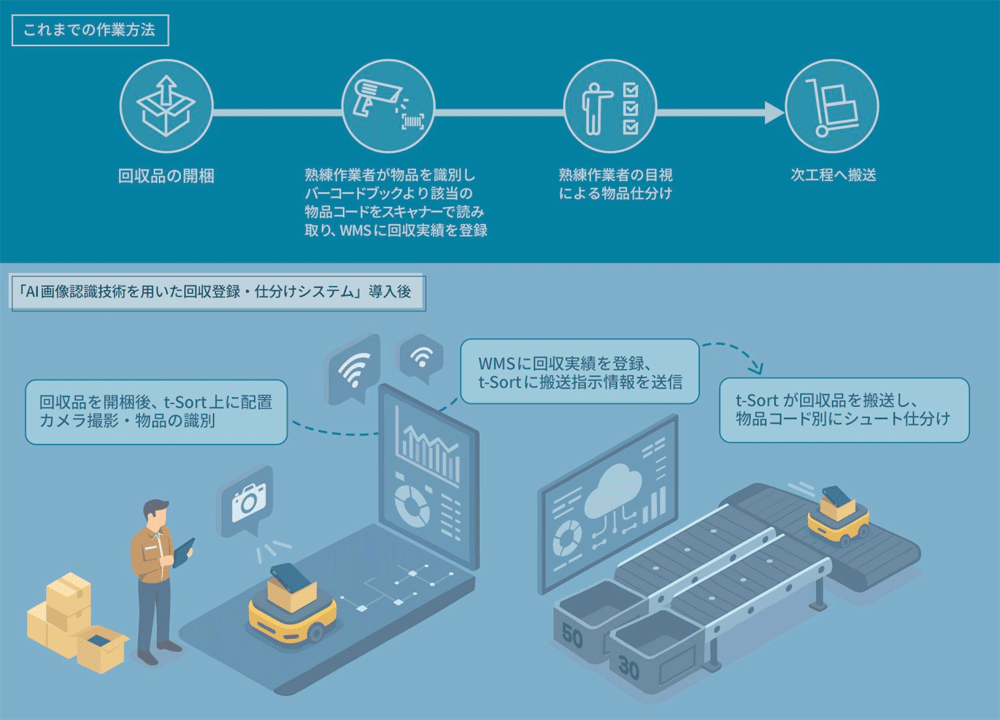
Recently, with the aim of improving the productivity and quality of the work process, the company has automated the work using an "automatic registration and sorting system" that combines its previously developed AI image recognition technology with AGVs (t-Sort).
The system works as follows: "The text information of the item name and the barcode information of the MAC address on the back of the collected rental communication equipment are automatically identified using AI image recognition technology, and the item information is registered in the WMS (Warehouse Management System)." "Instructions for sorting and transporting each item are sent from the WMS to the AGV (t-Sort), and automatic sorting is performed."
Key features include: "Optimization of identification accuracy and time by capturing images of the equipment itself multiple times at high speed," and "Automation and integration of previously separate work processes—such as 'registration of recovery records in the WMS' and 'physical transport and sorting by t-Sort'—into a single system based on image identification results."
The reported benefits of the implementation include "a 30% increase in productivity (number of units processed per worker)," "improved quality through achieving 0% sorting errors," and "establishment of a work system that does not rely on skilled workers."
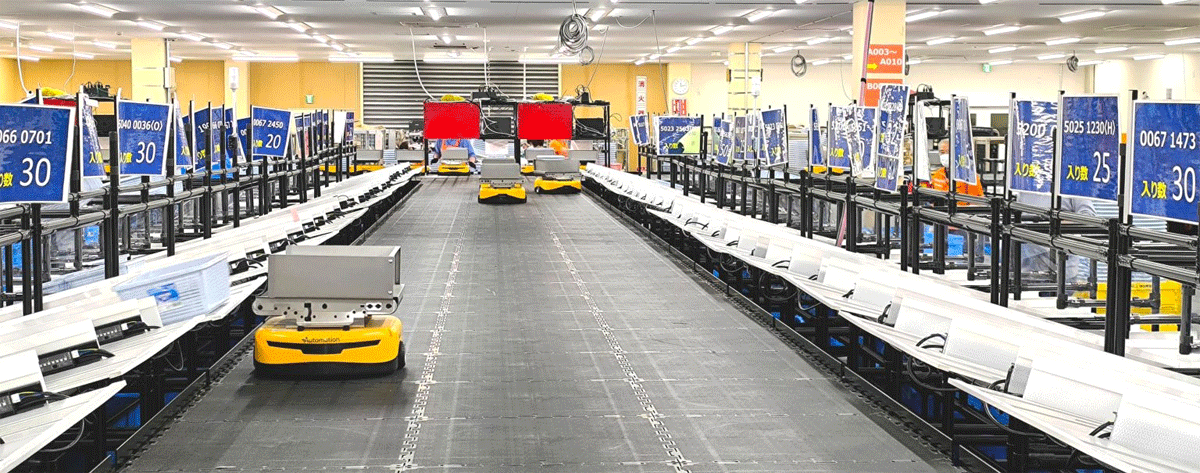
<"Collection registration and sorting system using AI image recognition technology" installed at the Saitama Logistics Center>
Previously, the registration and sorting of collected items involved unpacking over 300 types of used rental communication devices collected from general households and businesses at the company's Saitama Logistics Center. Workers then had to visually confirm the item names attached to the devices, find the corresponding barcodes in the barcode book provided, scan them with a handheld scanner, and register the item information in the WMS (Warehouse Management System). Furthermore, sorting by item code had to be done manually, resulting in a reliance on manual labor and a high degree of reliance on skilled workers.
NTT Logisco holds "NTT Logisco Group Best Practices Report Meeting for FY2025"


