


On December 10, GLP Japan held a media reception regarding the market for refrigerated and frozen logistics facilities. They analyzed market trends and promoted the multi-tenant refrigerated and frozen logistics facilities that GLP Japan is focusing on developing, stating, "Just as multi-tenant dry warehouses have become widespread, refrigerated and frozen warehouses will also be leased from now on."
<Shin Ito, Senior Manager, Sales Promotion Group>
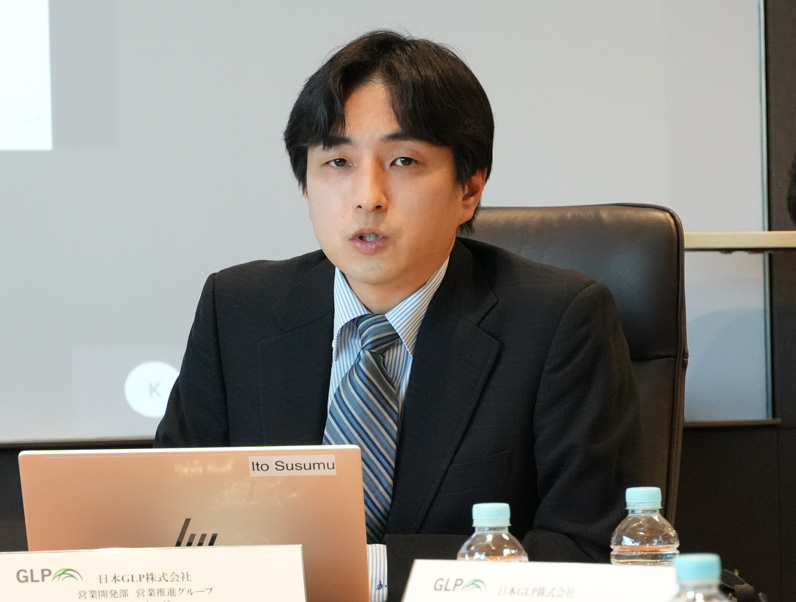
Shin Ito, Senior Manager of the Sales Promotion Group in the Sales Development Department at GLP Japan, stated, "GLP Japan's multi-tenant refrigerated and frozen logistics facilities aim to become the industry standard, based on three concepts: reduced investment, flexibility, and environmental consideration."
"For businesses that move in, there are no initial investment costs and no need for restoration work to the original condition. Flexible contracts are possible, similar to dry warehouses, including small-scale spaces and short-term occupancy. The adoption of natural refrigerants is also a key point as a measure to eliminate CFCs and save energy."
As of the end of November 2025, GLP Japan has 33 refrigerated and frozen logistics facilities, including those under development, with a total floor area of approximately 400,000 square meters. All completed facilities are at full capacity.
<Junya Kusahara, Senior Manager, Sales Development Department>
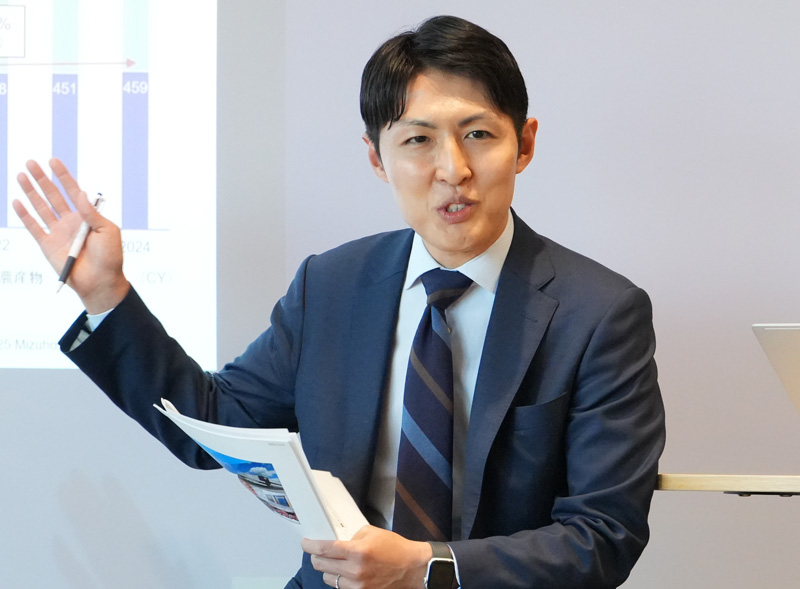
Furthermore, Junya Kusahara, Senior Manager of the Sales Development Department, introduced an example of Ogawa Livestock Foods, which was considering rebuilding its aging facilities and had entered into a short-term contract to temporarily store its goods.
He spoke about the concerns and needs he hears from businesses during sales activities, such as, "Rental-type refrigerated warehouses generally involve long-term contracts, and unlike dry warehouses, there are simply fewer rental properties available. Another challenge is that paying for restoration costs when vacating after a short period of time is a significant burden."
<Yuki Minami, Analyst at Mizuho Bank>
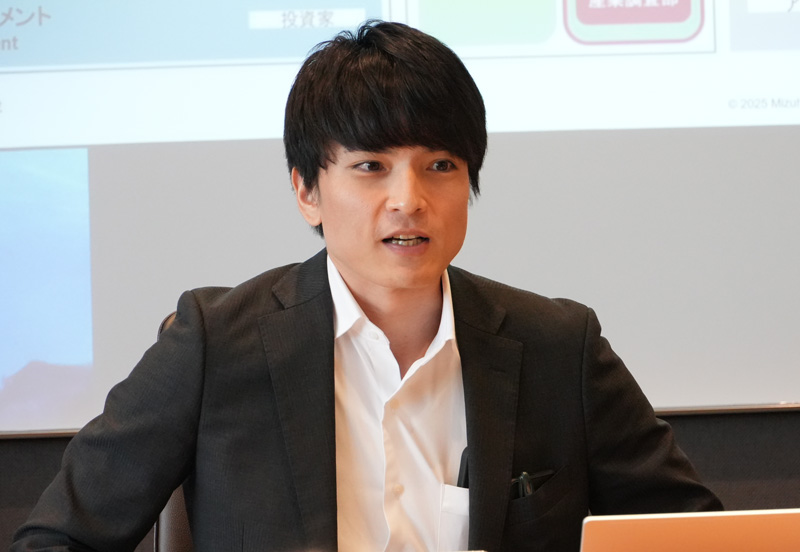
Regarding industry trends in cold chain logistics, Yuki Minami, an analyst in the Social Infrastructure Team of the Next-Generation Infrastructure and Services Office, Industry Research Department at Mizuho Bank, says, "While the volume of refrigerated warehouses nationwide is increasing due to factors such as the rising demand for frozen foods, they are particularly full in Tokyo, Kobe, and Fukuoka, and the warehouse capacity occupancy rate is becoming strained."
Approximately 3% of existing properties are over 40 years old, and if rebuilding does not progress, it will create supply constraints. However, the rising construction costs and the inability to secure a place to store belongings during rebuilding are said to be major obstacles.
In the case of refrigerated and frozen warehouses, the required temperature range and size are highly individualized, and it was common for businesses to build them themselves. Also, because developers have to invest large sums of money, they are forced to set higher rents compared to dry warehouses, which makes the rent seem "high" to the businesses.
However, Minami believes that "if cold chain operators and developers can reconcile the challenges they each face and separate ownership and operation, multi-tenant models will become more widespread."
Furthermore, GLP Japan has established a specialized team in 2017 to accelerate the development of logistics facilities that can handle freezing and refrigeration, and is expanding its warehouse space. It plans to invest approximately 200 billion yen over the next 3 to 5 years to significantly expand its freezing and refrigeration area to a total of 130,000 tsubo (approximately 430,000 square meters).


