


On December 11, Federal Express (FedEx) released its Global Economic Impact Report, which analyzes its role in driving innovation and its global network in fiscal year 2025.
<2025 Global Economic Impact Report>
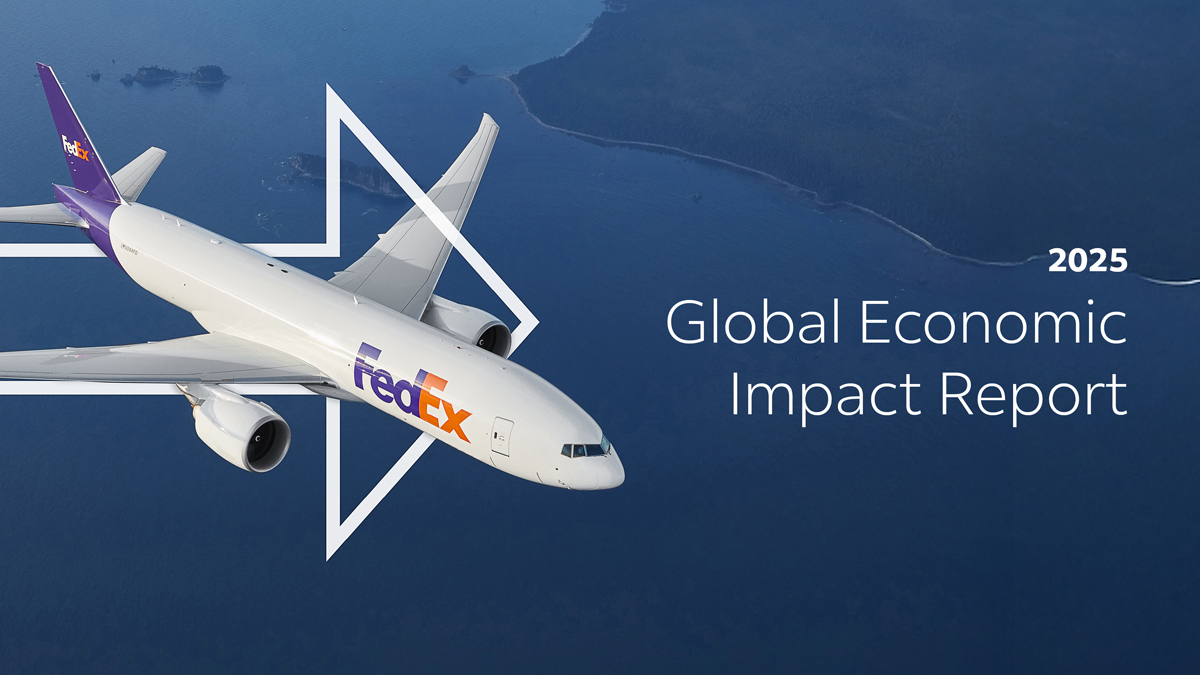
This report, created in collaboration with Dun & Bradstreet, a global company that provides data and analysis for business decision-making, illustrates the "FedEx effect," the impact FedEx has on the world.
The report states that FedEx's economic impact on the global economy will total $1260 billion in fiscal year 2025. This result reflects FedEx's ongoing efforts to expand its transportation network, improve services, and optimize operations.
In the Asia Pacific region, FedEx is projected to generate approximately $510 million in economic ripple effects in the transportation, warehousing, and communications sectors, and approximately $484 million in the manufacturing sector by 2025, resulting in an indirect economic ripple effect of $16 billion across the entire economy. Including direct effects, the total economic impact on the Asia Pacific economy is estimated to reach approximately $57 billion.
In terms of global impact, FedEx is strengthening its network by introducing multiple new air routes across the Asia Pacific region in fiscal year 2025. In addition to direct round-trip flights between Singapore and the United States, new routes are being opened connecting Guangzhou, where FedEx has its Asia Pacific hub facilities, with Bangalore, the UAE, Liège, and Paris. Furthermore, new small-package cargo facilities are being constructed in Laem Chabang on Thailand's Eastern Economic Corridor, demonstrating FedEx's commitment to meeting growing regional demand.
FedEx stated that 10% of the 9 suppliers it contracted with in fiscal year 2024 were small and medium-sized enterprises, which helped create hundreds of thousands of jobs in the supply chain.
Furthermore, they provided solutions and programs to small and medium-sized enterprises, such as FedEx import tools and joint shipping tools for import customers across the Asia Pacific market, thereby promoting the delivery of digital innovation.
The report also mentions sustainability, such as carbon neutrality, and social contributions, such as charitable activities and volunteer work.
In the report, FedEx President and CEO Raj Subramanian stated, "For more than 50 years, FedEx has connected communities through innovative delivery services and driven the development of global commerce. Our network has been able to continue to drive progress around the world over the past year, supported by a corporate culture that values innovation, exceptional service, and the unwavering commitment of our teams, even amidst a rapidly changing trade landscape and transformative supply chains."


