


NIPPON EXPRESS Holdings , Komeri, and Nippon Pallet Rental (JPR) announced on December 18th that Komeri has introduced rental pallets for importing its own developed products, and has begun integrated palletization for international transportation. Komeri has been entrusting its import operations from China to Japan to Nippon Express since 1999.
Amid a worsening labor shortage, the company expects to reduce the time spent loading containers onto the sea by approximately 1016 hours per year, aiming to alleviate the environmental burden previously associated with the disposal of wooden pallets.
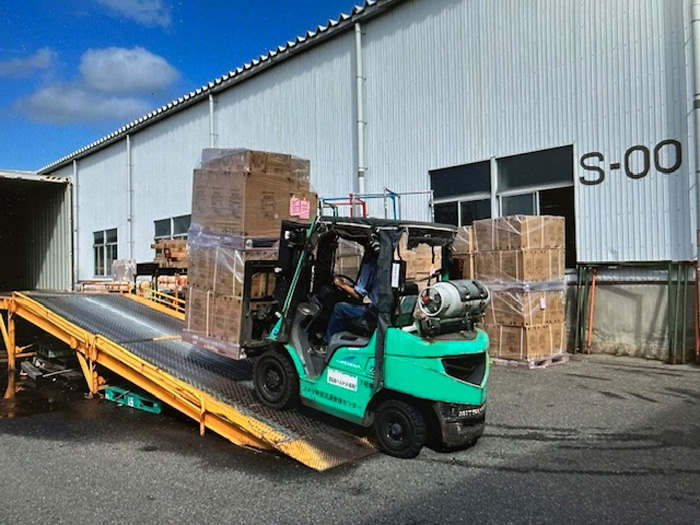
<Forklifts improve the efficiency of cargo handling>
<Overview of the initiative>
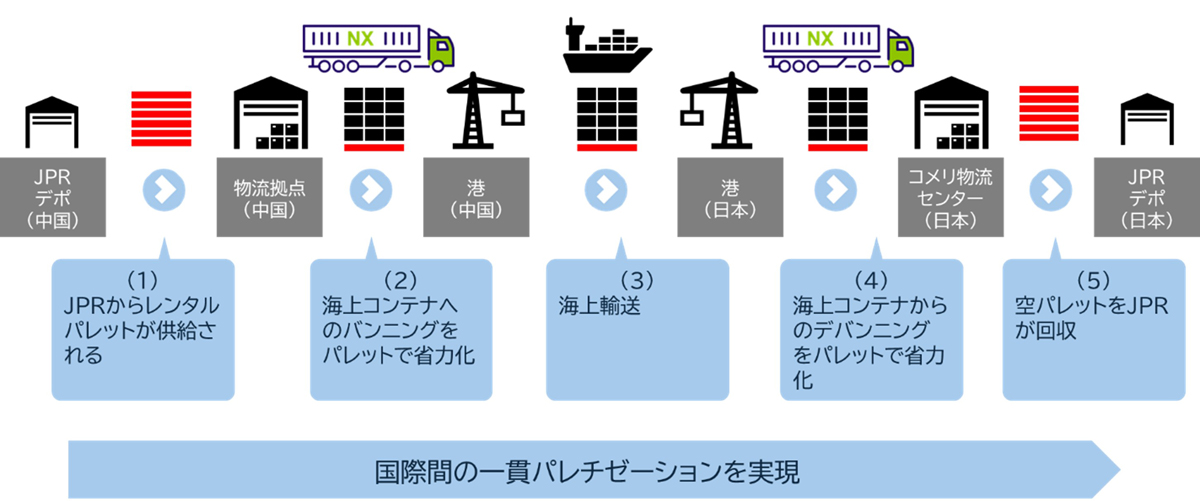
The process involves NX China, which acts as the base in the exporting country, receiving rental pallets from JPR and loading the goods onto the pallets before export.
The loading of containers into sea containers is streamlined using pallets. After sea transport, Nippon Express transports the containers by land from the import port to the Komeri logistics center, where unloading is also done using pallets.
Products are transported to Komeri logistics centers within Japan, still on pallets, and the empty pallets are returned to JPR.
<Loading onto shipping containers using pallets>
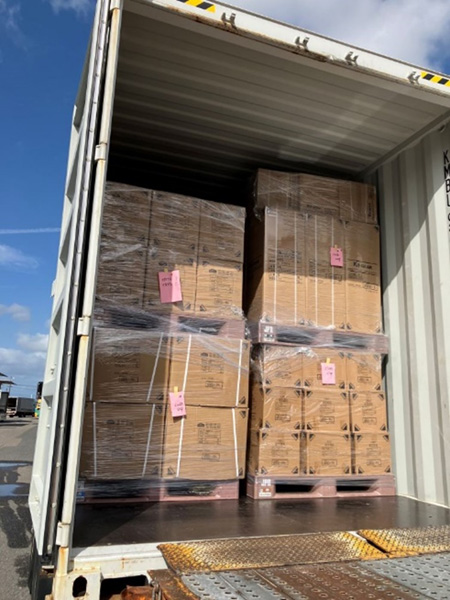
By using pallets like batons for transportation, manual handling is eliminated. This reduces working time by approximately 2 hours per container compared to 40-foot bulk containers, resulting in a reduction of approximately 1016 hours per year.
<Integrated palletization: Sharing standard-sized rental pallets between companies>
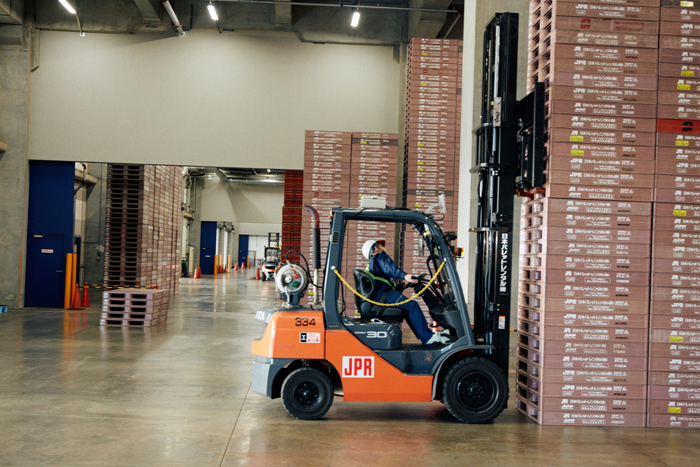
When Komeri entrusted its import operations to Nippon Express in 1999, products were transported in cartons (loose) rather than using pallets.
Subsequently, in response to the logistics challenges of 2024, they switched from transporting goods loose to using wooden pallets. Furthermore, from October 2025, they switched to transporting goods using JPR's plastic rental pallets.
Previously, wooden one-way pallets were discarded after delivery, but by switching to rental pallets, the annual waste of approximately 2 pallets has been eliminated. This is expected to lead to an annual reduction of approximately 170 tons of CO2 emissions.
JPR/Palette Day (November 12th) launches special page


