


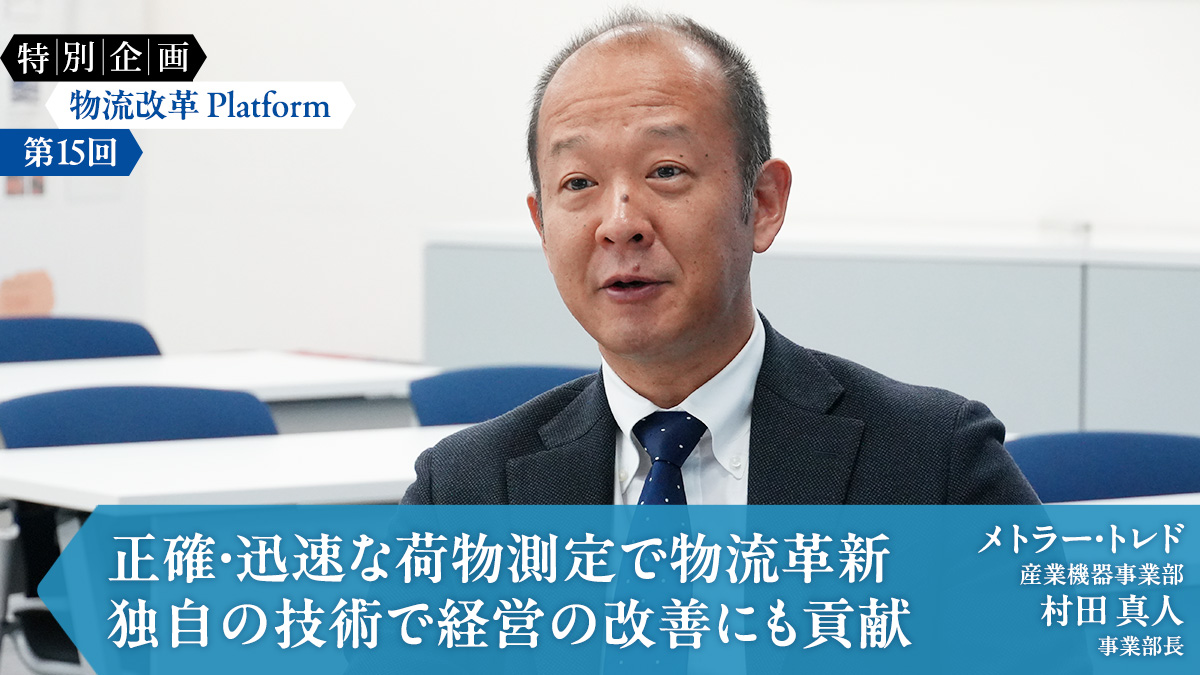
Precisely measuring the size and weight of packages for storage and shipping—this seemingly "obvious" process can easily lead to risks such as damaging a company's reputation or undercharging for freight and storage fees if subjectivity or ambiguity enters the picture. Mettler Toledo (headquartered in Switzerland), a global manufacturer boasting the world's largest market share in precision scales, offers solutions that minimize these risks. How will their products, which are used in logistics centers around the world, transform operations in Japan? We spoke with Masato Murata, General Manager of the Industrial Equipment Division, to learn about their true value. (Interview date: December 23, 2025, at Mettler Toledo Japan Headquarters in Tokyo)
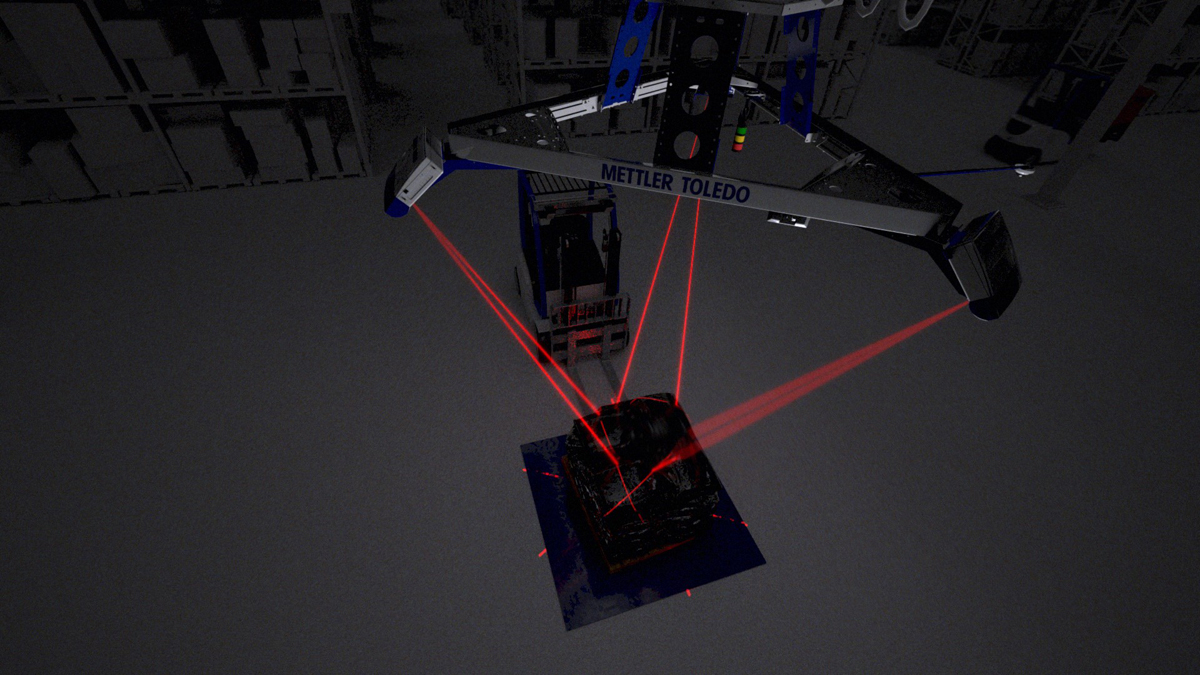
Objects measured by laser
Point cloud data conversion using proprietary patented technology
-- Mettler-Toledo has a world-class brand reputation when it comes to "measuring," from ultra-high-precision equipment used in laboratories to massive pallet scales. What are your main products in logistics today?
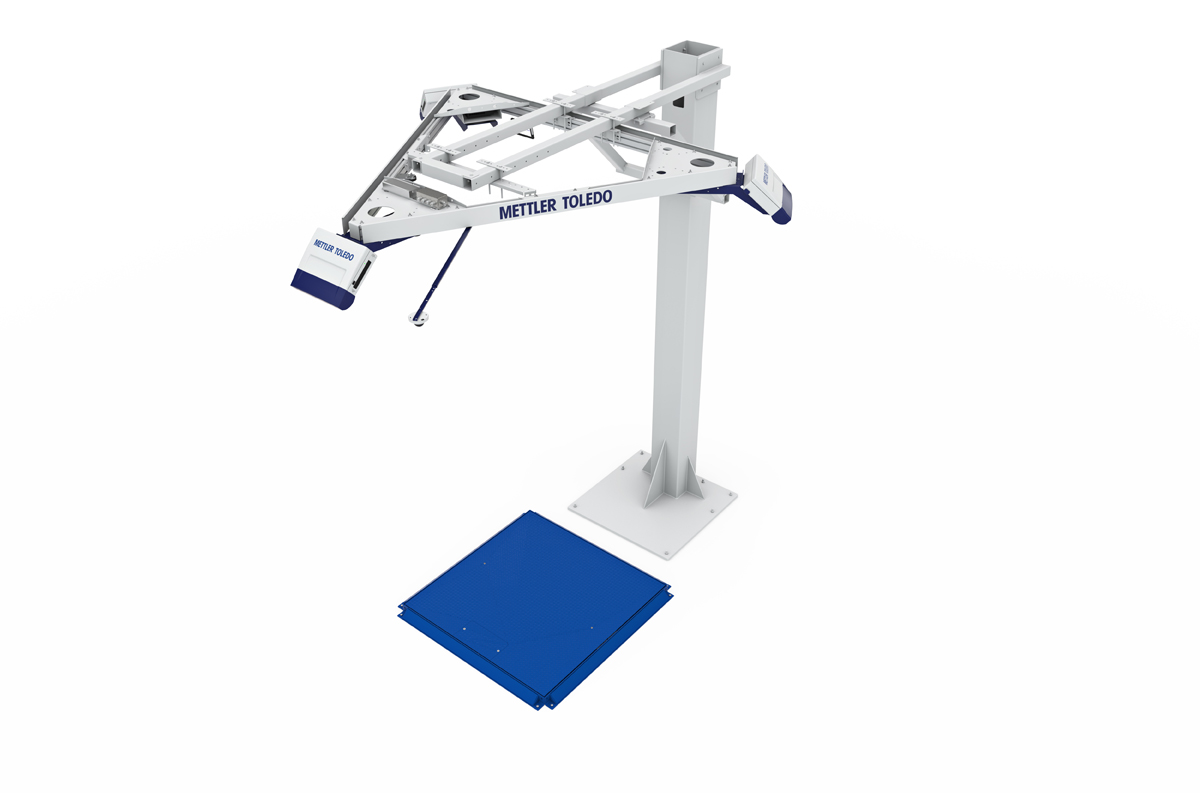
This is Murata's automated pallet dimension measurement system. Logistics companies in Japan, in particular, are showing great interest in the "TLD870" model due to its ease of data integration with inventory management systems and other systems.
The "TLD870" uses a laser to measure the length, width, and height of cargo, measuring up to 240 pallets per hour. It can measure up to 2.5m x 2.5m x 2.6m, making it useful not only for measuring the size of large cargo for shippers, freight forwarders, and warehouse operators, but also for determining weight and digitizing barcode data. Weight is measured separately from the laser device using an optional floor scale, and this data is also digitized along with the dimensions.
In a case study where Sanritsu introduced the "TLD870" and floor scale "PFA584" at its bonded warehouse "Narita Business Office" (Warehouse No. 2) in Narita City, Chiba Prefecture in December 2023, the weighing and measuring time per pallet was drastically reduced from 90 seconds to approximately 4 seconds, and the elimination of human error significantly increased customer trust.
<TLD870>
<Video of implementation examples at Sanritsu>
— Is it possible to determine volume and other specifications from the "TLD870" data? Also, what kinds of locations can it be installed in?
Based on length , width, and height data, it is also possible to determine surface area and volume. While it cannot be used outdoors or in environments where the temperature exceeds 50 degrees Celsius or falls below -10 degrees Celsius, it is designed to withstand harsh industrial applications in warehouses and other environments where people can work, provided that the necessary space is secured.
<Measurement Image>
— Many packages have complex shapes or are covered in materials that are difficult to measure with lasers. What kind of technology is used to accurately measure them?
Minoru Murata: The roots of this technology lie in a Norwegian company called "CargoScan," founded in 1985. We acquired the company in 2000, and at the time of its founding, it was developing technology for sorting PET bottles for recycling. It used laser beams to capture the approximate shape of PET bottles as point cloud data, and then sorted the PET bottles according to their shape. This technology started in a field unrelated to logistics.
As you all know, the surface of plastic bottles is shiny and smooth, and they come in various shapes, making it difficult to accurately capture them with a laser. The core of this technology lies in the development of software algorithms that distinguish between reflected light and scattered light, which required a great deal of time and effort. We also possess patented technology that separates data from lasers hitting objects other than the object being measured, as well as data from other light sources, to create point cloud data.
Conventional measuring devices could only measure the length, width, and height of a rectangular box, but using point cloud data allows for accurate measurement of irregular shapes, ensuring that "missing parts" and "overhangs" are not missed. This proves highly effective when planning truck loading schedules.
In a major American logistics company
The finance department is focusing on the potential for improved profits.
—A processing capacity of up to 240 pallets per hour directly translates to increased productivity in logistics operations.
While it's true that Murata 's system improves the efficiency of handling cargo, many users also emphasize the significant improvement in profits that comes from accurate measurements.
A major American logistics company had installed the "TLD970," a system based on the same technology as the "TLD870" but capable of measuring cargo while it was moving on forklifts, on a limited basis. As a result, storage and freight costs per box increased at the locations where it was installed. The company decided that "if the equipment is this effective, it should be installed at all locations immediately," and ultimately, the order was placed after strong pressure from the finance department. It seems that before the installation, they were undercharging freight charges because they were not accurately measuring the size of the cargo. Looking at the company's annual report, the effectiveness is evident from the steadily increasing cost per box.
<Department Head Murata>

— Undercharging due to inaccurate measurements seems like a situation that could easily happen in Japan as well.
When Murata and a certain Japanese shipping company conducted research to uncover the truth, they discovered that packages were being undercharged for shipping due to inaccurate size measurements. This amounted to several million yen per day, which led them to purchase our size measuring equipment.
By making these kinds of cases known to more companies, I hope they will re-evaluate whether or not they are charging fair freight and storage fees, and proactively work towards improving their management. This will lead to the happiness of drivers and their families, and more importantly, I believe it will contribute to solving Japan's logistics problems.
When we exhibited at a trade show, some people said things like, "There aren't any products like this on the market, so we were trying to make one ourselves," and others said, "At a meeting, I said, 'Before we proceed with development, I'll go to the trade show one more time to check if it exists,' and I only found out about its existence when I came here today." So we believe we need to be more proactive in making our products known to everyone.
To prevent problems with declarations during export,
Also helps to mitigate the risk of damage to luggage.
—Accurate measurement can not only improve profitability but also enhance a company's credibility, which seems likely to contribute to a company's "survival" in the future.
With Murata's "TLD870," the optional camera captures photographs taken during measurements, saving the data instantly. This allows you to quickly refer to the data later to see which cargo was measured, when, and what the cargo looked like. Even if cargo is damaged during transport, it can be properly traced, providing evidence if the cargo is claimed to be "broken" or "dented" during export container loading.
Shippers often tell freight forwarders, "We're exporting, so please be sure to provide accurate actual dimensions." Therefore, freight forwarders provide all the data obtained from "TLD870," using it as a form of customer service and a valuable sales tool.
I heard from a customer handling export cargo that customs sometimes point out discrepancies between the actual package size and the declared package size. They're told, "This declaration is for a different shipment," which is a matter of trust. If the data is digitized, this kind of thing will never happen.
-- Finally, do you have a message for those involved in logistics in Japan?
Murata: I have always argued that "logistics reform is difficult without data." We must move away from measurements that rely on subjectivity and custom, and first, correctly collect the data that is currently being overlooked and objectively verify it. That is when true reform can begin. I would like to continue to deliver Mettler Toledo and our solutions to as many people as possible so that we can be the catalyst for those on the ground to take that first step.
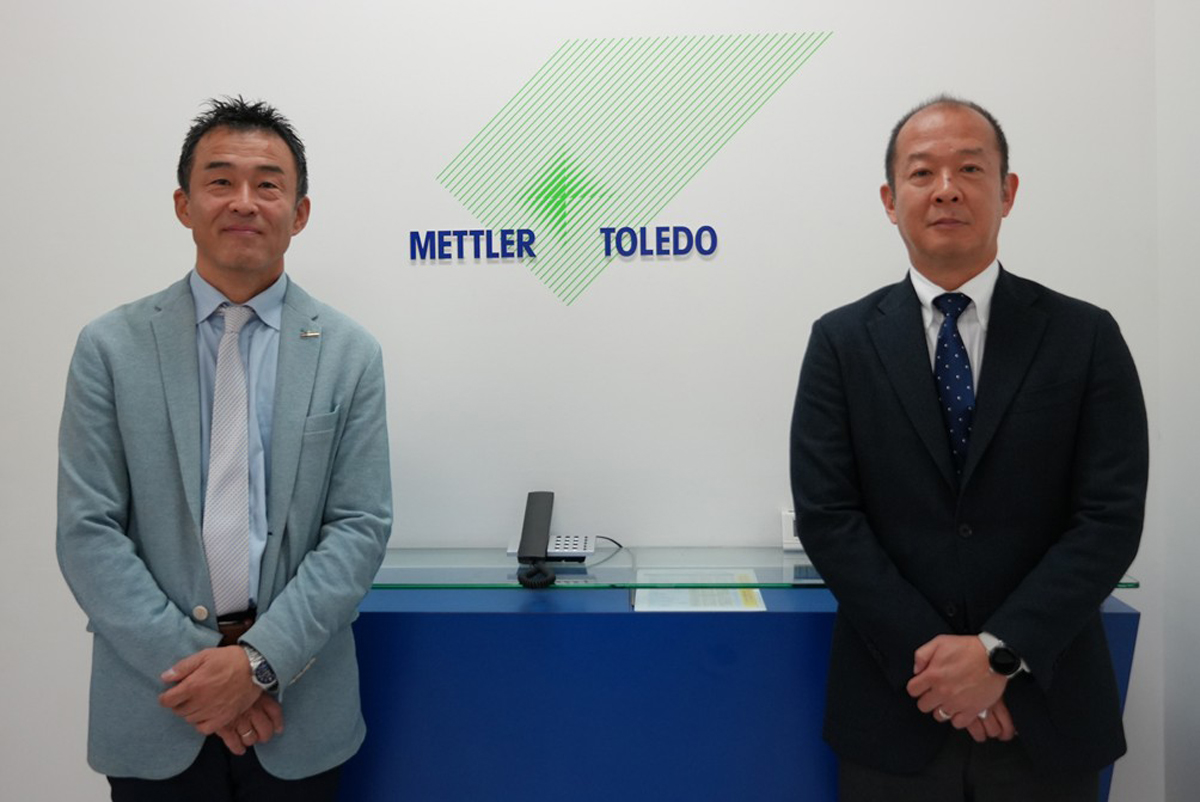
<"Accurate data is the key to logistics reform," say Katsuyuki Sakai, Business Development Manager (left), and Department Manager Murata (right).>
■Click here for the "TLD870" product page (link)
■ For more details on the "TLD870" specifications, please click here (link).


